6 min read
Can a Fracture Heal Without Surgery? Here's What Orthopedic Surgeons Recommend
Wondering whether every fracture needs surgery? Learn which fractures heal naturally, when surgery is necessary, recovery tips, FAQs, and treatment options.
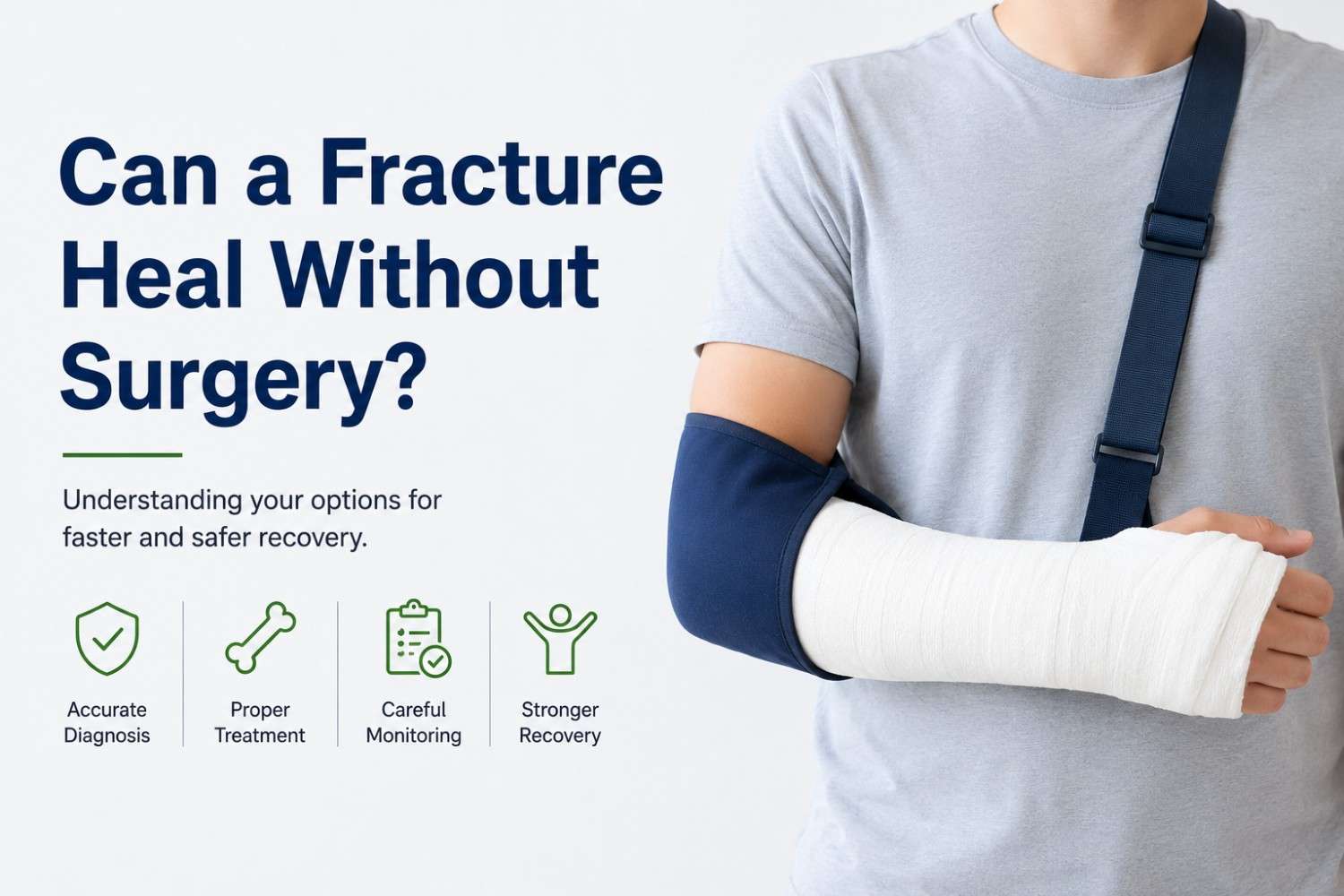
Can a Fracture Heal Without Surgery? Here's What Orthopedic Surgeons Recommend
Hearing the words "you have a fracture" can be worrying. One of the first questions most patients ask is, "Will I need surgery?" The good news is that the answer is often no. Many fractures heal successfully without an operation when they are diagnosed early and treated correctly.
Modern orthopedic treatment focuses on choosing the least invasive option that provides the best long-term outcome. Depending on the type of fracture, its location, and whether the broken bone remains properly aligned, your orthopedic surgeon may recommend non-surgical treatment instead of surgery. Understanding the difference can help you make informed decisions about your recovery.
Can a Bone Heal Without Surgery?
Yes. Bones naturally heal themselves through a remarkable biological process. When a fracture occurs, the body immediately starts repairing the damaged bone by forming new bone tissue around the fracture site.
If the broken pieces remain in good alignment and the fracture is stable, surgery is often unnecessary. Instead, the bone can heal using immobilization with a cast, splint, brace, or sling, combined with regular follow-up examinations.
The key is receiving an accurate diagnosis from an experienced orthopedic specialist. Proper evaluation determines whether conservative treatment is safe or whether surgery is necessary to prevent long-term complications.
Which Fractures Usually Do NOT Need Surgery?
Many fractures heal successfully without an operation, including:
Hairline fractures
Stress fractures
Stable wrist fractures
Certain collarbone fractures
Some ankle fractures
Simple finger and toe fractures
Non-displaced fractures where the bones remain aligned
These injuries generally require proper immobilization, pain management, and periodic X-rays to ensure healing is progressing normally.
When Is Surgery Necessary?
Although many fractures heal naturally, surgery becomes necessary in situations where the bone cannot heal correctly on its own.
Your orthopedic surgeon may recommend surgery if:
The fracture is displaced and the bones are significantly out of alignment.
The fracture extends into a joint.
The bone breaks into multiple fragments (comminuted fracture).
The fracture is open and the bone has pierced the skin.
Blood vessels or nerves have been injured.
The fracture remains unstable after reduction.
Previous conservative treatment has failed.
These situations require more advanced orthopedic care to restore normal anatomy and preserve joint function.
How Orthopedic Surgeons Decide the Right Treatment
Treatment decisions are never based only on an X-ray. Your orthopedic surgeon evaluates several factors before recommending surgery or conservative treatment.
Patient's age
Activity level
Overall health
Bone quality
Location of fracture
Amount of displacement
Joint involvement
Future functional requirements
For example, the same fracture may be treated differently in a professional athlete, an elderly patient, or a young office worker.
What Does Non-Surgical Treatment Include?
When surgery is not required, treatment usually involves a combination of:
Immobilization
A cast, splint, brace, or sling keeps the fractured bone stable while natural healing occurs.
Medication
Pain medications and anti-inflammatory medicines help reduce discomfort during the initial healing phase.
Follow-up Imaging
Regular X-rays allow your orthopedic surgeon to confirm that the fracture remains properly aligned throughout recovery.
Physiotherapy
Once sufficient healing has occurred, physiotherapy helps restore strength, flexibility, and normal movement.
What If the Fracture Involves a Joint?
Joint fractures require special attention because even small alignment problems may lead to arthritis, stiffness, or long-term pain. Some joint fractures can still be treated conservatively, while others require minimally invasive procedures.
If cartilage or joint structures are damaged, your orthopedic surgeon may recommend arthroscopy surgery, which allows accurate treatment through small incisions while preserving surrounding tissues.
Complex Fractures Require Specialized Care
Not every fracture is straightforward. Severe trauma, multiple broken bones, or fractures involving deformity often require specialized orthopedic treatment.
Patients with these injuries may benefit from comprehensive Trauma Care & Orthopaedic Services, where treatment is tailored according to the severity of the injury, associated soft tissue damage, and long-term functional goals.
Certain complicated fractures that heal incorrectly or result in limb shortening may require advanced reconstructive procedures. In such situations, Limb Reconstruction & Lengthening techniques can restore alignment, improve function, and help patients regain mobility.
How Long Does a Fracture Take to Heal?
Healing time varies depending on age, overall health, fracture location, and severity. While every patient heals differently, typical recovery times include:
Small bones: 3–6 weeks
Upper limb fractures: 6–8 weeks
Lower limb fractures: 8–12 weeks
Complex fractures: Several months
Returning to sports or physically demanding work often takes longer than the bone itself takes to heal because surrounding muscles and joints also need rehabilitation.
Can You Speed Up Bone Healing?
Although healing follows its own biological timeline, patients can improve recovery by:
Following your orthopedic surgeon's instructions carefully
Eating a balanced diet rich in calcium, protein, and Vitamin D
Avoiding smoking and excessive alcohol consumption
Keeping chronic conditions like diabetes under control
Avoiding unnecessary stress on the injured limb
Completing your physiotherapy program
While these measures support healing, they cannot replace proper medical treatment. Never remove your cast or resume strenuous activities without your doctor's approval.
Common Myths About Fracture Treatment
Myth 1: Every Broken Bone Needs Surgery
This is one of the biggest misconceptions. Many fractures heal perfectly with casts, splints, and rehabilitation.
Myth 2: If Pain Reduces, the Bone Has Fully Healed
Pain usually improves before the bone completely heals. Follow-up X-rays are essential before returning to sports or heavy physical activity.
Myth 3: Surgery Means Faster Recovery
Not necessarily. Surgery helps when required, but it also requires rehabilitation. The goal is proper healing—not simply choosing the fastest-looking option.
When Should You See an Orthopedic Surgeon Immediately?
Seek immediate medical attention if you experience:
Visible bone deformity
Open wounds with exposed bone
Severe swelling or increasing pain
Loss of sensation or numbness
Unable to bear weight after injury
Persistent bleeding or suspected joint injury
Early evaluation often makes treatment simpler and reduces the risk of long-term complications.
Frequently Asked Questions
1. Can all fractures heal naturally?
No. Stable, non-displaced fractures often heal naturally, while displaced, open, or unstable fractures may require surgery.
2. How do doctors decide whether surgery is necessary?
The decision depends on fracture type, alignment, joint involvement, patient age, activity level, and overall health.
3. How long should I wear a cast?
Most casts remain in place for 4 to 8 weeks, although this varies depending on the bone involved and healing progress.
4. Can I walk on a fractured leg without surgery?
Only if your orthopedic surgeon advises it. Walking too early can delay healing or worsen the fracture.
5. What foods help fractures heal faster?
Protein-rich foods, calcium, Vitamin D, Vitamin C, and a balanced diet support healthy bone healing.
6. When should I contact my doctor after a fracture?
If pain increases, swelling worsens, numbness develops, your cast feels too tight, or you develop fever or wound drainage, seek medical advice immediately.
Final Thoughts
Not every fracture requires surgery. Many broken bones heal successfully with proper immobilization, careful monitoring, and rehabilitation. However, some fractures need surgical treatment to restore normal alignment and prevent long-term complications. The key is receiving an accurate diagnosis and following the treatment plan recommended by your orthopedic specialist.
Whether your injury is simple or complex, early medical evaluation can make a significant difference in your recovery. Patients with severe fractures should never delay treatment, especially when joints, nerves, or multiple bones are involved.
If you've suffered a fracture or suspect a broken bone, consult an orthopedic specialist for a complete evaluation. Learn more about our Trauma Care & Orthopaedic Services, explore advanced Limb Reconstruction & Lengthening options for complex injuries, or book your consultation for personalized treatment.
Related Articles
Sciatica vs Back Pain: Warning Signs That Need Urgent Spine Evaluation
Back pain with pain travelling into the leg may involve irritation of a nerve root.
Stress Fracture Symptoms in Runners: When Pain Is More Than a Shin Splint
Pain that becomes more focal and worsens with running may be more than a routine training ache.
Hip Pain When Walking: Causes That Need an Orthopedic Assessment
Hip pain while walking can come from the joint, surrounding muscles, spine, or an earlier injury.