6 min read
Orthopedic Surgeon in Delhi: When Should You See One?
Wondering when to see an orthopedic surgeon in Delhi? Learn the signs, common conditions treated, benefits of early care, FAQs, and expert orthopedic treatment options.
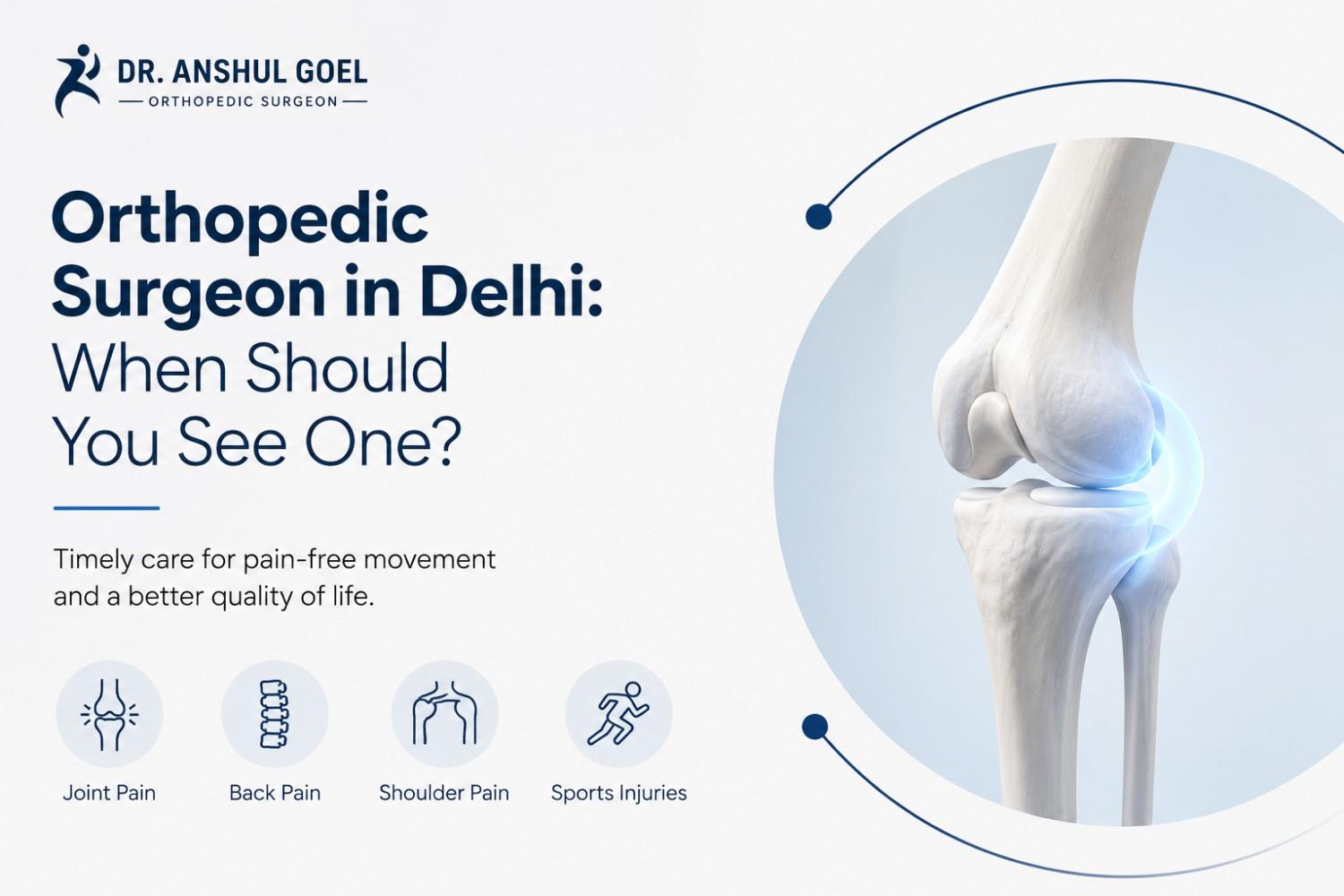
Orthopedic Surgeon in Delhi: When Should You See One?
Bone, joint, muscle, and spine problems can affect people of every age. While occasional aches after physical activity are common, persistent pain, stiffness, swelling, or difficulty moving should never be ignored. These symptoms may indicate an underlying orthopedic condition that requires professional evaluation.
Many people delay visiting an orthopedic surgeon because they assume the pain will improve with rest or medication. Unfortunately, postponing treatment may allow the condition to worsen, making recovery longer and sometimes increasing the need for surgery.
If you're searching for an Orthopedic Surgeon in Delhi, understanding when to seek medical attention can help you receive timely treatment, reduce pain, and maintain an active lifestyle.
Our comprehensive orthopedic services cover everything from joint pain and sports injuries to advanced joint replacement and spine care.
Who Is an Orthopedic Surgeon?
An orthopedic surgeon is a specialist who diagnoses and treats conditions affecting the bones, joints, ligaments, tendons, muscles, and spine. While many orthopedic conditions can be managed without surgery, these specialists are also trained to perform advanced procedures whenever required.
Modern orthopedic treatment focuses on relieving pain, restoring mobility, improving joint function, and helping patients return to their normal daily activities as quickly and safely as possible.
Common Conditions Treated by an Orthopedic Surgeon
Orthopedic surgeons manage a wide range of musculoskeletal problems, including:
Knee pain and arthritis
Hip pain and joint degeneration
Shoulder pain and frozen shoulder
Back and neck pain
Sports injuries
Bone fractures
Ligament and tendon injuries
Joint stiffness
Osteoarthritis
Spinal disorders
Signs You Should Visit an Orthopedic Surgeon
1. Persistent Joint Pain
Joint pain that lasts for more than a few weeks should not be ignored. Whether the discomfort affects your knees, hips, shoulders, or ankles, persistent pain may indicate arthritis, cartilage damage, ligament injury, or another orthopedic condition.
Patients experiencing severe knee arthritis or long-term joint damage may eventually require specialized treatments such as Knee Replacement Surgery if conservative treatment no longer provides relief.
2. Difficulty Walking or Climbing Stairs
Pain while walking, climbing stairs, or standing for extended periods may indicate knee arthritis, hip problems, or muscle weakness. Early diagnosis often allows treatment before mobility becomes significantly affected.
3. Shoulder Pain That Doesn't Improve
Persistent shoulder pain, reduced range of motion, or difficulty lifting your arm could be caused by frozen shoulder, rotator cuff injuries, tendon inflammation, or arthritis.
Our specialized Shoulder Treatment services include comprehensive evaluation and personalized treatment plans for a wide range of shoulder conditions.
4. Hip Pain Affecting Daily Activities
Hip pain that interferes with walking, sitting, or sleeping should always be evaluated. Conditions such as arthritis, hip impingement, or joint degeneration often respond better when treated early.
Patients with advanced arthritis may benefit from expert evaluation for Hip Replacement Surgery when other treatments are no longer effective.
5. Persistent Back or Neck Pain
Back pain lasting more than a few weeks, especially when associated with numbness, tingling, or weakness in the arms or legs, requires medical evaluation. Delaying treatment may allow spinal problems to progress.
Learn more about our Spine Treatment services for comprehensive care of back and neck conditions.
6. Sports Injuries
Sports injuries involving the knees, shoulders, ankles, or ligaments should be assessed promptly. Proper diagnosis helps reduce recovery time and lowers the risk of long-term joint instability.
Our Sports Injury Treatment program provides expert care for ligament tears, tendon injuries, muscle strains, and rehabilitation.
Do You Always Need Surgery?
No. One of the biggest misconceptions about orthopedic surgeons is that they only perform operations. In reality, many orthopedic conditions are successfully treated without surgery through medications, physiotherapy, lifestyle modifications, joint injections, and rehabilitation programs.
Surgery is usually recommended only when conservative treatment has failed or when the condition significantly limits mobility and quality of life.
Benefits of Early Orthopedic Consultation
Early consultation with an orthopedic surgeon offers several advantages. Many bone and joint conditions respond better to treatment when diagnosed in their initial stages, helping patients avoid complications and recover more quickly.
Accurate diagnosis of the underlying problem
Timely treatment before the condition worsens
Better pain management
Improved mobility and joint function
Reduced risk of permanent joint damage
Greater chance of avoiding surgery
Ignoring persistent pain may lead to progressive joint damage, reduced mobility, and longer recovery periods. Seeking medical advice early gives you access to a wider range of treatment options.
What Happens During Your First Orthopedic Consultation?
During your first visit, the orthopedic surgeon will carefully evaluate your symptoms, medical history, lifestyle, and daily activities. A physical examination is performed to assess joint movement, muscle strength, and areas of pain.
If required, imaging investigations such as X-rays or MRI scans may be recommended to confirm the diagnosis. Based on the findings, a personalized treatment plan is prepared that may include medications, physiotherapy, lifestyle modifications, injections, or surgery if necessary.
How to Maintain Healthy Bones and Joints
Although not every orthopedic condition can be prevented, healthy lifestyle habits significantly reduce the risk of joint degeneration and injuries.
Exercise regularly to strengthen muscles and joints.
Maintain a healthy body weight.
Follow a balanced diet rich in calcium and vitamin D.
Practice good posture while sitting and working.
Wear proper footwear during physical activities.
Avoid repetitive strain and lift heavy objects correctly.
Seek treatment early if pain persists.
Choosing the Right Orthopedic Surgeon in Delhi
When selecting an orthopedic surgeon, look for experience, comprehensive treatment options, patient-centered care, and expertise in managing both surgical and non-surgical orthopedic conditions. A specialist who focuses on accurate diagnosis and individualized treatment plans can help achieve better long-term outcomes.
Whether you're dealing with arthritis, sports injuries, fractures, spine disorders, or shoulder problems, choosing an experienced orthopedic specialist ensures you receive the most appropriate treatment for your condition.
Frequently Asked Questions
1. When should I consult an orthopedic surgeon?
You should consult an orthopedic surgeon if joint pain, back pain, fractures, sports injuries, or stiffness persist for more than a few weeks, interfere with daily activities, or worsen despite rest and medication.
2. Can an orthopedic surgeon treat problems without surgery?
Yes. Many orthopedic conditions are successfully managed using medications, physiotherapy, rehabilitation, injections, and lifestyle modifications. Surgery is recommended only when conservative treatment is unlikely to provide sufficient relief.
3. What conditions does an orthopedic surgeon treat?
Orthopedic surgeons treat arthritis, fractures, ligament injuries, sports injuries, shoulder disorders, spine conditions, hip pain, knee pain, tendon injuries, and various bone and joint disorders.
4. Do I need an X-ray before visiting an orthopedic surgeon?
Not necessarily. Your orthopedic surgeon will first evaluate your symptoms and perform a physical examination. Imaging tests such as X-rays or MRI scans are advised only when clinically required.
5. What is the most common reason people visit an orthopedic surgeon?
The most common reasons include knee pain, arthritis, back pain, shoulder pain, fractures, sports injuries, and difficulty walking due to joint problems.
6. How can I book an appointment with an orthopedic surgeon in Delhi?
If you're experiencing persistent bone, joint, or muscle pain, you can book a consultation here for a comprehensive orthopedic evaluation and personalized treatment plan.
Final Thoughts
Persistent pain in your bones, joints, muscles, or spine should never be ignored. Early diagnosis and timely treatment can prevent complications, reduce pain, and help you return to your normal routine more quickly. Whether you're dealing with arthritis, a sports injury, shoulder pain, hip problems, or chronic back pain, consulting an experienced orthopedic surgeon is the first step toward lasting relief.
Explore our complete range of Orthopedic Services, including Knee Replacement Surgery, Hip Replacement Surgery, Shoulder Treatment, Spine Treatment, and Sports Injury Treatment. If you have ongoing orthopedic concerns, schedule your consultation today.
Related Articles
Lumbar Spinal Stenosis: Why Walking Hurts
Why can spinal stenosis hurt while walking but ease with sitting? Learn the symptom pattern, diagnosis, treatment options and warning signs.
प्लास्टर के बाद उंगलियां नीली या सुन्न?
प्लास्टर के बाद उंगलियां नीली, सुन्न या बहुत सूजी हुई हों तो इसे सामान्य न मानें। चेतावनी संकेत और कब तुरंत चिकित्सा मदद लें, समझें।
Knee Replacement के बाद क्लिक: क्या करें?
Knee replacement के बाद क्लिक की आवाज कब सामान्य हो सकती है? दर्द, सूजन या अस्थिरता के साथ आवाज आने पर डॉक्टर से कब मिलें, जानें।