6 min read
Hip Replacement Recovery Time: What to Expect After Surgery
Learn hip replacement recovery time, what to expect after surgery, how recovery progresses week by week, and when to seek medical help.
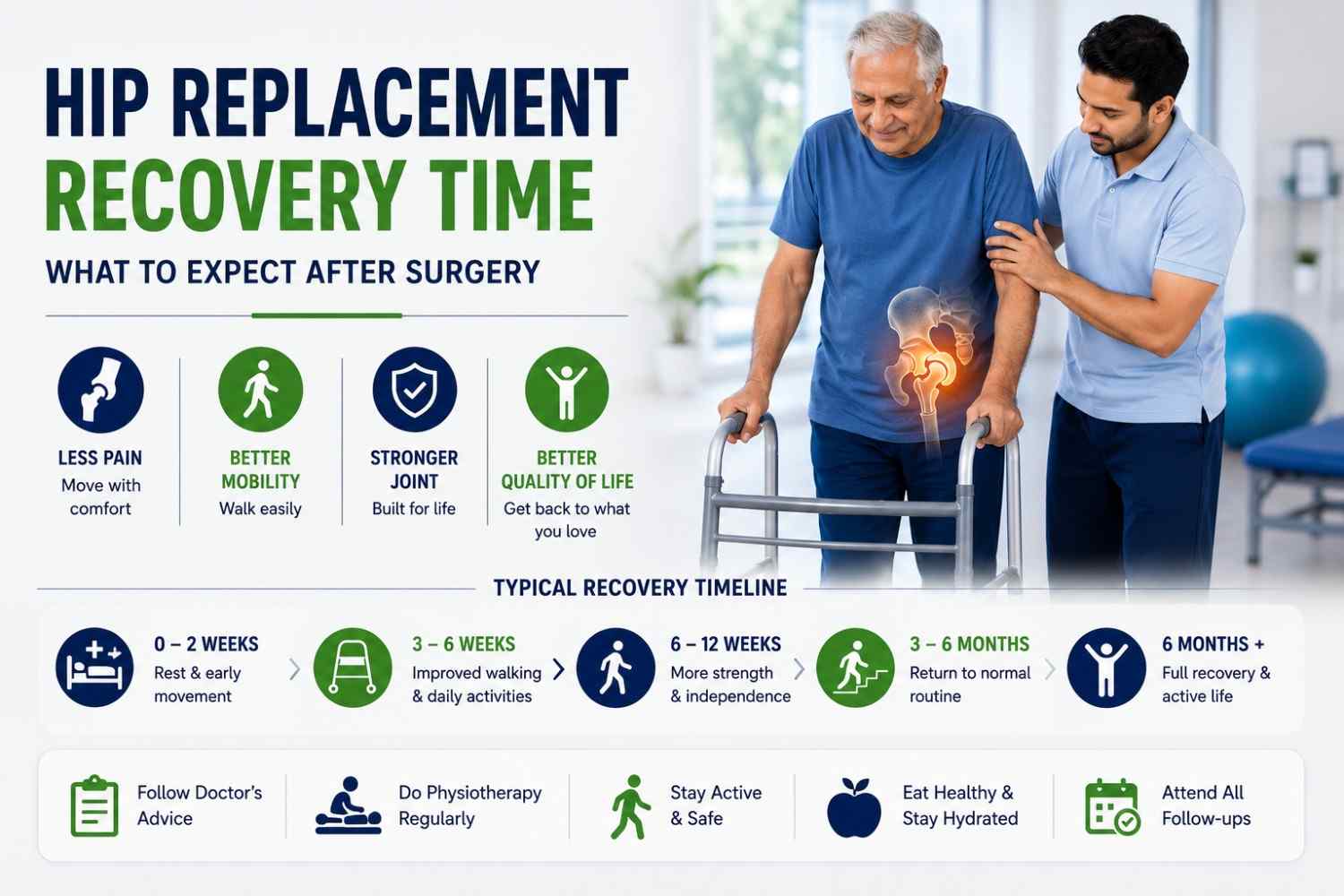
Hip Replacement Recovery Time: What to Expect After Surgery
Hip replacement surgery can change a patient’s life when chronic hip pain starts limiting basic movements like walking, standing, sitting, or sleeping comfortably. But once the surgery is done, the next big question is always the same: how long does recovery actually take? The answer depends on the type of surgery, your overall health, your age, your muscle strength, and how well you follow the rehabilitation plan.
If you are preparing for surgery or helping a family member recover, understanding the timeline helps remove unnecessary fear. Recovery is not one sudden jump back to normal. It happens in stages. The early days focus on pain control and mobility, the next few weeks focus on walking and strength, and the later months focus on full function and confidence. For anyone exploring treatment options, the hip replacement surgery page is a useful starting point, and the broader orthopaedic services section can help you understand the related procedures available on the website.
What Happens Right After Hip Replacement Surgery?
The first 24 to 72 hours after surgery are usually the most uncomfortable, but they are also the most important for setting up a smooth recovery. Pain, swelling, and stiffness are normal. Most hospitals encourage patients to get out of bed early, often with support, because early movement reduces the risk of complications and helps the joint begin functioning again.
You may be surprised at how soon the medical team asks you to stand, sit, and take a few steps. That is intentional. The goal is not to push you too hard. The goal is to prevent the hip from stiffening and to restore basic mobility as early as possible. In this stage, the main focus is on pain management, wound care, and safe movement.
Week 1 to Week 2: Getting Comfortable With Basic Movement
During the first two weeks, most patients are learning how to move safely again. Simple tasks such as getting in and out of bed, using the washroom, and walking a short distance become part of daily recovery. Some patients will still need support from a walker or walking aid. That is normal and expected.
At this stage, swelling and soreness may still be present, especially after activity. This does not mean recovery is going wrong. It means the body is healing. The most important thing is to follow instructions carefully, take medication as prescribed, and avoid twisting, bending too far, or doing anything that puts sudden stress on the new joint.
Week 3 to Week 6: The Turning Point
This is usually the period when patients begin feeling more confident. Pain generally becomes more manageable, mobility improves, and walking gets smoother. Many people can start reducing dependence on walking aids based on their surgeon’s advice and the progress of physiotherapy.
This phase matters because it is where routine starts to return. You may be able to walk longer distances, sit more comfortably, and do light daily activities with less hesitation. It is also the time when physiotherapy becomes even more important. Strengthening the muscles around the hip supports the implant and improves stability. Patients who take rehabilitation seriously usually recover better than those who try to skip it.
Two to Three Months: Building Strength and Stability
By the second or third month, many patients notice a major difference in how they move. Walking feels more natural, standing becomes easier, and basic self-care is usually much less difficult. That does not mean the hip is fully healed. It means the body is progressing well.
At this stage, the focus shifts from basic recovery to function. You are not just trying to heal the surgical wound. You are trying to regain balance, muscle control, and endurance. Exercises may include guided strengthening, stretching, and low-impact movement under supervision. This is also the stage when patients who have had joint replacement surgery in general often start comparing their own progress with hip recovery, but every joint and every patient heals differently.
Three to Six Months: Near-Normal Life for Most Patients
For many patients, the three to six month window is when life starts feeling normal again. Most of the stiffness is gone, the pain is much lower, and everyday tasks become manageable. Some people recover faster, while others need more time depending on age, fitness level, and whether there were other health issues before surgery.
If the surgery was done for severe arthritis or long-standing hip damage, recovery may take a little longer because the body has to adapt after years of altered movement. That is why it is a mistake to assume recovery is finished just because walking improves. Full recovery means the hip is strong, stable, and reliable in daily life.
What Slows Down Recovery?
Some patients heal faster than others, and the difference is not luck. Several factors can slow down recovery. Poor physiotherapy compliance is one of the biggest problems. If exercises are skipped, strength and flexibility return more slowly. Excess weight, uncontrolled diabetes, smoking, poor sleep, and ignoring movement restrictions can also delay healing.
Another common mistake is doing too much too soon. Patients sometimes feel better and assume they can return to normal work, stairs, or outdoor activity immediately. That can create setbacks. Recovery is not about rushing. It is about rebuilding the joint in a controlled way.
Signs That You Should Not Ignore
Some discomfort is expected after surgery, but certain signs need medical attention. Call your doctor if you notice increasing redness, drainage from the wound, severe swelling that is getting worse instead of better, fever, sudden severe pain, or difficulty putting weight on the leg after initial improvement. These signs do not always mean something serious is wrong, but they should never be dismissed.
If you have not yet planned the procedure and want to speak with a specialist first, the fastest option is the contact page, where you can arrange a consultation and discuss your symptoms, imaging, and treatment plan.
How to Recover Better and Faster
The best recovery usually comes from consistency. Take medicines on time. Follow wound care instructions. Do the physiotherapy exercises regularly. Sleep well. Eat enough protein. Walk safely. Avoid risky movements. These are not glamorous tips, but they work.
- Attend every follow-up appointment
- Do not skip physiotherapy sessions
- Use walking support until your doctor clears you
- Avoid bending or twisting the hip beyond advised limits
- Keep the incision clean and dry
- Build activity gradually instead of forcing speed
Patients who stay disciplined during recovery usually get back to a better quality of life sooner. That is the real point of surgery in the first place: less pain, better movement, and more independence.
Final Thoughts
Hip replacement recovery time is different for every patient, but the pattern is usually predictable. The first two weeks are about protection, the first six weeks are about mobility, the next few months are about rebuilding strength, and the full recovery period often stretches to three to six months or more depending on the case. The important thing is not to judge recovery by one day or one week. Judge it by steady progress.
If hip pain has already made walking, sleeping, or daily movement difficult, it is worth discussing the next step with a specialist. For more treatment details, review the hip replacement surgery page and use the consultation page to book an appointment.
Related Articles
Knee Replacement Recovery Timeline: Walking, Stairs, and Return to Daily Activities
Knee-replacement recovery progresses gradually and varies by health, surgical plan, and rehabilitation.
Shoulder Pain at Night: Common Causes and When to See an Orthopedic Surgeon
Night shoulder pain can disrupt sleep and make everyday movement difficult.
Arthroscopic Knee Surgery: What It Treats and How It Differs From Open Surgery
Arthroscopic knee surgery has transformed recovery for many knee conditions. Here's what it actually involves and why it differs so much from traditional open surgery.