6 min read
Knee Replacement vs Knee Preservation: How Surgeons Decide
Knee replacement isn't the automatic next step once a knee starts hurting. Here's the actual decision-making process behind preservation versus replacement.
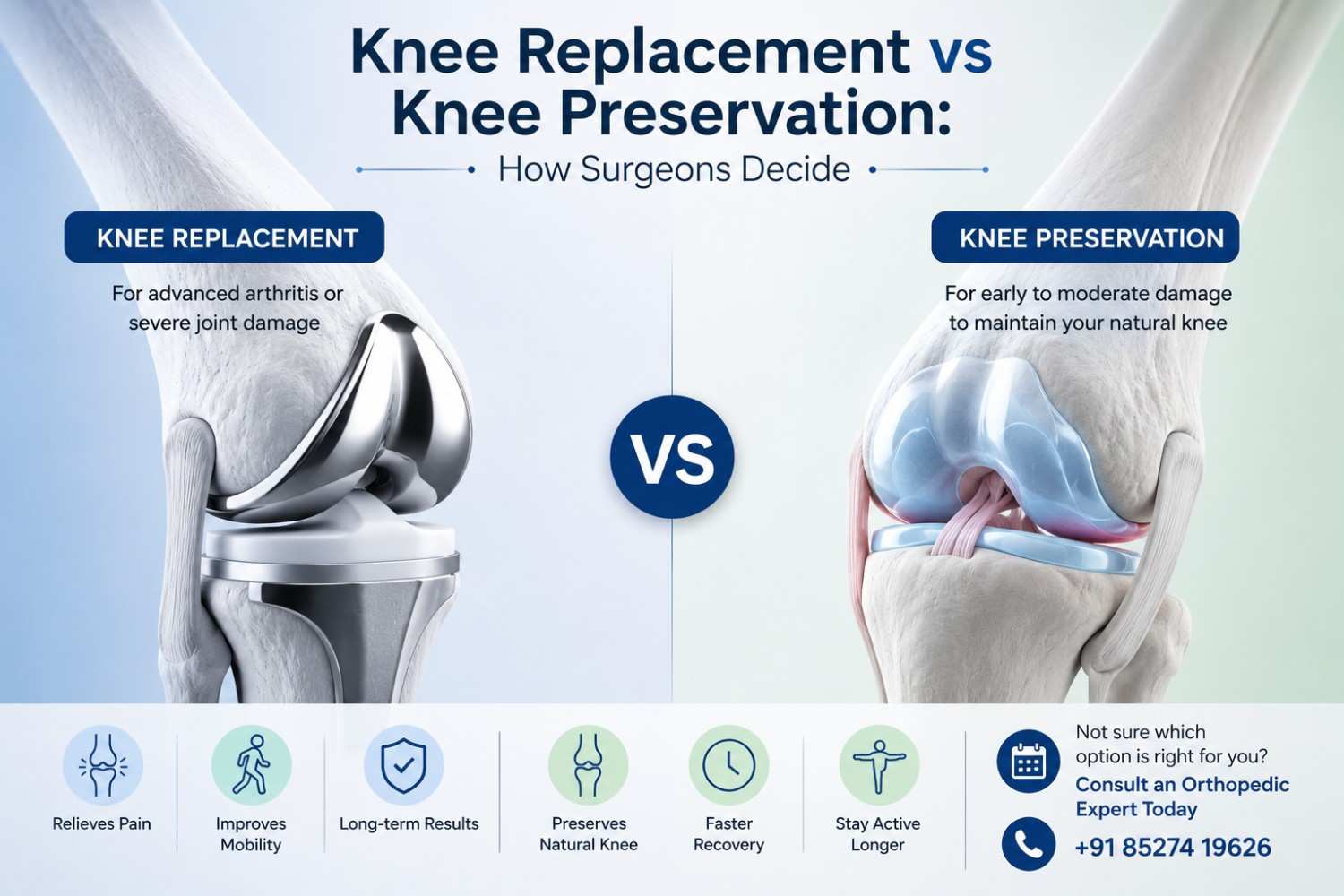
Knee Replacement vs Knee Preservation: How Surgeons Decide
Total knee replacement is often the treatment people jump to mentally once they hear "arthritis" or "bone on bone" used to describe their knee, but it's far from the automatic next step. Orthopedic surgeons have a range of joint-preserving treatments available before replacement becomes the right choice, and understanding how that decision is actually made helps patients have a more informed, less anxious conversation with their surgeon.
What "Knee Preservation" Actually Includes
Knee preservation covers a range of treatments aimed at managing symptoms and slowing progression while keeping the patient's own joint intact: structured physiotherapy targeting the muscles supporting the knee, weight management where relevant given the significant mechanical load excess weight places on the joint, activity modification, injections (including corticosteroid or viscosupplementation), and in select cases, joint-preserving surgical procedures like arthroscopic debridement or osteotomy (surgically realigning the joint to shift weight-bearing away from a damaged area).
Factors That Influence the Decision
Severity and Pattern of Joint Damage
The degree of cartilage loss, visible on X-ray and sometimes MRI, and whether damage is confined to one part of the knee or affects the whole joint, meaningfully shapes which options are realistic. Damage confined to one compartment of the knee sometimes makes a patient a candidate for a partial rather than total replacement, or for a joint-preserving procedure, where damage affecting the whole joint more strongly points toward total replacement as the more effective option.
Age and Activity Level
Knee replacements have a functional lifespan, modern implants often last well beyond fifteen to twenty years, but they aren't indefinite, and a younger, more active patient may reasonably want to delay replacement through preservation strategies for as long as symptoms remain manageable, reserving replacement surgery for later.
Severity of Symptoms and Impact on Daily Life
Pain and functional limitation that significantly affect daily activities, sleep, or independence weigh differently in the decision than milder, intermittent symptoms that respond reasonably well to conservative measures.
Response to Conservative Treatment So Far
Whether physiotherapy, weight management, and other non-surgical measures have already been tried, and how much benefit they provided, meaningfully informs whether continuing that approach or moving toward surgery makes more sense at this point.
Overall Health and Surgical Risk
General health, existing medical conditions, and individual surgical risk factors are always weighed against the expected benefit of replacement surgery, particularly for older patients with other health considerations.
When Preservation Genuinely Isn't Enough
For advanced arthritis with significant cartilage loss across the joint, particularly when pain persists despite a genuine trial of conservative treatment and significantly limits daily function, knee replacement typically becomes the more effective option, both for pain relief and for restoring meaningful function, rather than continuing to manage symptoms that preservation strategies are no longer adequately addressing.
A Decision Made Together, Not Imposed
The most important part of this decision-making process is that it should be collaborative, based on a clear discussion of the specific findings on imaging, how symptoms are actually affecting daily life, and the patient's own goals and preferences, not a default protocol applied uniformly to every knee that hurts. Our knee replacement practice takes this approach deliberately, exploring preservation options fully before recommending replacement, and being equally direct when preservation is genuinely unlikely to provide adequate relief.
Recognising When It's Time to Revisit the Conversation
Many patients successfully manage knee arthritis with preservation strategies for years, but it's worth periodically revisiting the conversation with your surgeon rather than assuming the original plan remains the right one indefinitely. Meaningful changes, pain that's becoming harder to manage, new difficulty with stairs or walking distances that were previously comfortable, or sleep increasingly disrupted by knee pain, are all reasonable prompts to reassess rather than continuing an approach that's quietly stopped working as well as it once did. Our related article on early signs of knee osteoarthritis covers the earlier end of this same spectrum, useful context for understanding how the condition typically progresses over time.
What Recovery Looks Like for Each Path
Preservation strategies generally involve an ongoing, ideally sustainable, commitment to physiotherapy, activity modification, and periodic reassessment rather than a defined recovery period. Knee replacement, by contrast, involves an intensive several-month recovery process, but one that, for the right candidate, is followed by a meaningfully longer period of reliable, significantly improved function. Understanding this difference, ongoing management versus a defined recovery investment, helps patients weigh the two paths against their own life circumstances and preferences, not just the clinical findings alone.
Discuss Your Knee Treatment Options
Frequently Asked Questions (FAQs)
1. Can knee replacement be avoided entirely with a healthy lifestyle?
For some people, sustained healthy weight, regular appropriate exercise, and avoiding significant joint injury can meaningfully reduce arthritis risk, though genetics also play a role that lifestyle alone cannot fully offset.
2. Can both knees be treated with preservation strategies if both are affected?
Yes, preservation strategies can generally be applied to both knees simultaneously, tailored to each knee's specific findings and symptom severity.
3. Does a family history of arthritis affect how this decision is made?
It can be relevant context, particularly for understanding disease progression risk, though the decision itself is based primarily on the individual's own current findings and symptoms rather than family history alone.
4. Can knee preservation strategies delay replacement indefinitely for everyone?
Not for everyone, some patients' arthritis progresses despite good adherence to preservation strategies, which is why periodic reassessment matters rather than assuming any single approach will work indefinitely.
5. Can knee preservation strategies be combined with each other?
Yes, and this is common, physiotherapy, weight management, and activity modification are often used together rather than as isolated alternatives to one another.
6. Can knee arthritis get better with physiotherapy alone?
Physiotherapy can meaningfully improve symptoms and function, particularly in earlier stages, by strengthening the muscles supporting the joint, though it doesn't reverse existing cartilage damage.
7. How long can knee replacement surgery reasonably be delayed with preservation strategies?
This varies considerably by individual, some patients manage well with preservation strategies for years, while others progress to needing replacement sooner, depending on the severity and progression of joint damage.
8. Is partial knee replacement an option for everyone with knee arthritis?
No, it's only appropriate when damage is confined to one part of the knee, which is determined through imaging and clinical evaluation rather than assumed.
9. Do knee injections actually help, or are they just a temporary fix?
Injections can provide meaningful symptom relief for a period, sometimes months, and are a reasonable part of a preservation strategy, though they don't reverse underlying joint damage.
10. Is weight loss really significant for knee arthritis symptoms?
Yes, given the mechanical load on the knee joint, even modest weight loss can produce a meaningful reduction in knee pain and slow symptom progression for many patients.
11. How do I know if I should ask about replacement versus continuing conservative treatment?
This is best discussed directly with your orthopedic surgeon based on your specific imaging findings, symptom severity, and how much conservative treatment has already helped.
This article is for educational purposes and does not replace personalized medical advice. Please consult a qualified physician before making changes to your treatment, medication, or health screening plan.
Related Articles
Sciatica vs Back Pain: Warning Signs That Need Urgent Spine Evaluation
Back pain with pain travelling into the leg may involve irritation of a nerve root.
Stress Fracture Symptoms in Runners: When Pain Is More Than a Shin Splint
Pain that becomes more focal and worsens with running may be more than a routine training ache.
Hip Pain When Walking: Causes That Need an Orthopedic Assessment
Hip pain while walking can come from the joint, surrounding muscles, spine, or an earlier injury.