6 min read
Osteoarthritis of the Knee: Early Signs and Non-Surgical Treatment Options
Knee osteoarthritis rarely appears overnight. Here's how to recognise it early, and the non-surgical treatments that can meaningfully slow its progression.
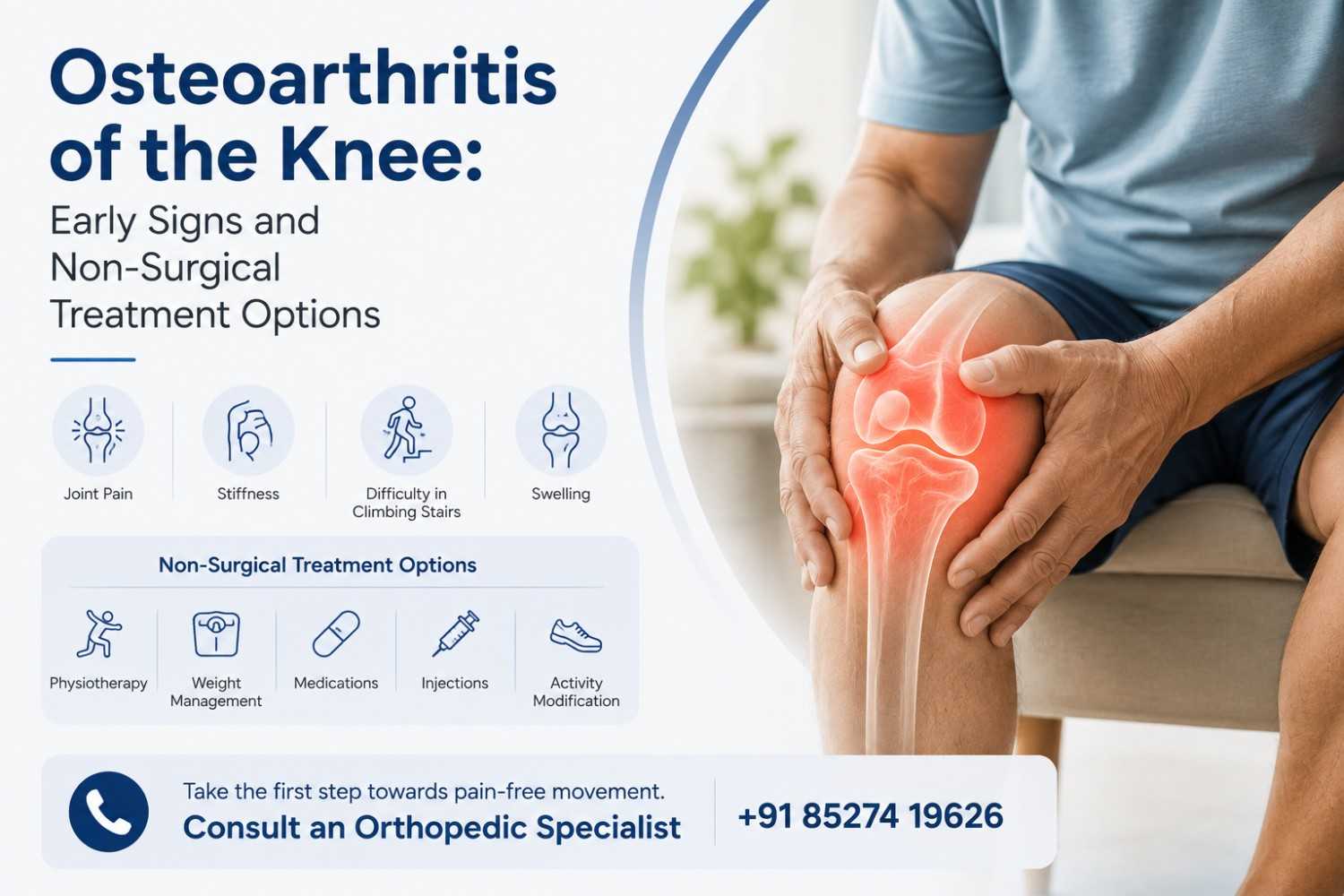
Osteoarthritis of the Knee: Early Signs and Non-Surgical Treatment Options
Knee osteoarthritis, the gradual breakdown of cartilage cushioning the knee joint, is often thought of as a condition of advanced age with severe pain and visible deformity, but its earliest signs are considerably subtler and often dismissed as ordinary aches for years before a proper diagnosis is made. Recognising it earlier opens up a wider range of effective, non-surgical treatment options.
Early Signs Worth Paying Attention To
Morning Stiffness That Eases With Movement
Knee stiffness that's noticeable first thing in the morning or after periods of inactivity, and that improves within about 30 minutes of movement, is a classic early sign of osteoarthritis, distinct from the more prolonged stiffness associated with inflammatory arthritis conditions.
Aching That Worsens With Activity
Discomfort that increases with prolonged standing, walking, or climbing stairs, and improves with rest, points toward the mechanical wear pattern characteristic of osteoarthritis.
Occasional Swelling
Mild, intermittent swelling, particularly after a more active day, can be an early sign, often overlooked or attributed simply to overuse.
A Grinding or Crackling Sensation
A sensation or sound of grinding (crepitus) during knee movement, particularly when going up or down stairs, is common in early osteoarthritis as cartilage surfaces become less smooth.
Gradually Reduced Range of Motion
A subtle, gradual difficulty fully bending or straightening the knee compared to previously, often noticed only when directly compared to how the knee used to feel.
Why Early Recognition Matters
Osteoarthritis is a progressive condition, and while it can't currently be reversed, its progression can often be meaningfully slowed, and symptoms significantly improved, with the right approach started early, before more advanced joint damage limits the range of effective options.
Non-Surgical Treatment Options
Targeted Physiotherapy
Strengthening the muscles supporting the knee, particularly the quadriceps, meaningfully reduces load on the joint itself and can significantly improve pain and function, often more effectively than many patients initially expect from "just exercise."
Weight Management
Given the substantial mechanical load the knee bears with each step, even modest weight loss can produce a proportionally larger reduction in the force transmitted through an arthritic knee, translating into meaningful symptom improvement.
Activity Modification
This doesn't mean stopping activity, inactivity generally worsens outcomes, but adjusting activity type, favouring lower-impact options like cycling or swimming over high-impact activities during symptomatic periods, while staying generally active.
Bracing and Supportive Devices
Certain knee braces can help redistribute load away from the more damaged part of the joint, providing meaningful symptom relief for some patients, particularly with damage confined to one part of the knee.
Medication and Injections
Anti-inflammatory medication, and in some cases corticosteroid or viscosupplementation injections, can provide meaningful symptom relief, particularly useful for managing flare-ups or bridging periods before other strategies take full effect.
When to See a Specialist
If knee symptoms are persistent, affecting daily activities, or you're uncertain whether what you're experiencing reflects early osteoarthritis or something else, an orthopedic evaluation, including a physical examination and, where appropriate, imaging, provides clarity and a proper, individualised treatment plan rather than continuing to guess. Our knee care practice sees particular value in catching osteoarthritis at this earlier stage, when non-surgical strategies have the greatest opportunity to meaningfully change the trajectory of the condition. Our related article on knee replacement versus preservation covers what happens if and when non-surgical strategies eventually stop providing adequate relief.
Living Well With Early Osteoarthritis
A diagnosis of early osteoarthritis, while it can feel discouraging, doesn't mean an inevitable, rapid decline into significant disability. Many people manage the condition effectively for many years, sometimes decades, with the right combination of strategies, and a substantial proportion never progress to needing surgical intervention at all. Building sustainable habits early, rather than treating the diagnosis as a crisis requiring dramatic lifestyle upheaval, tends to produce better long-term adherence and, correspondingly, better long-term outcomes than short bursts of intense effort followed by a return to prior habits.
Footwear and Simple Daily Adjustments
Beyond the major treatment categories, small daily adjustments genuinely add up: supportive, well-cushioned footwear reduces impact through the knee with each step, while worn-out shoes with inadequate support can worsen symptoms. Being mindful of prolonged kneeling or squatting, common in certain occupations and household tasks, and using supportive aids like a cane during flare-ups (a change many patients resist due to perceived stigma, despite its genuine mechanical benefit) are practical, low-cost adjustments worth genuine consideration.
Frequently Asked Questions (FAQs)
1. Should someone with early symptoms avoid running altogether?
Not necessarily, many people continue running comfortably with early osteoarthritis, though monitoring symptoms and adjusting volume or surface if pain increases is a reasonable, individualised approach.
2. Does climate or weather genuinely affect osteoarthritis symptoms?
Many patients report weather sensitivity, particularly with cold or damp conditions, though the scientific evidence for this connection remains somewhat mixed and it varies considerably between individuals.
3. Can early knee osteoarthritis affect only certain activities and not others?
Yes, many patients notice symptoms specifically with certain movements, like stairs or squatting, while other activities remain comfortable, a pattern that itself provides useful diagnostic information.
4. Can supplements like glucosamine help with early knee osteoarthritis?
Evidence for glucosamine and similar supplements is mixed, and while some patients report subjective benefit, it shouldn't replace the more well-established strategies of physiotherapy, weight management, and activity modification.
5. Is it worth getting an X-ray even for mild, occasional knee symptoms?
For persistent or recurring symptoms, yes, a baseline X-ray can help establish whether early osteoarthritis is present and guide appropriate management before symptoms potentially progress further.
6. Can osteoarthritis affect only one knee, or does it usually affect both?
It can affect just one knee, particularly if related to a prior injury on that side, though bilateral involvement is also common, especially with general age-related wear.
7. Is knee osteoarthritis only a condition of old age?
It's more common with age, but it can develop earlier, particularly with prior joint injury, obesity, or repetitive high-impact activity, so it shouldn't be dismissed as impossible in a younger person.
8. Can knee osteoarthritis be reversed?
Currently, cartilage damage from osteoarthritis can't be fully reversed, but progression can often be meaningfully slowed and symptoms significantly improved with appropriate treatment, especially when started early.
9. Is exercise safe for someone with knee osteoarthritis?
Yes, and it's generally beneficial, appropriately chosen and dosed exercise strengthens supporting muscles and can meaningfully reduce symptoms, though very high-impact activity may need modification during flare-ups.
10. How is osteoarthritis different from rheumatoid arthritis?
Osteoarthritis is a mechanical, wear-related condition, while rheumatoid arthritis is an autoimmune inflammatory condition. They have different symptom patterns, causes, and treatments, so an accurate diagnosis matters.
11. Do knee braces actually help with osteoarthritis symptoms?
For some patients, particularly with damage confined to one part of the knee, a properly fitted unloader brace can meaningfully reduce pain by redistributing load away from the damaged area.
12. When does osteoarthritis eventually require surgery?
When non-surgical treatments no longer provide adequate relief and symptoms significantly limit daily function, knee replacement becomes a reasonable option, though this point varies considerably by individual.
This article is for educational purposes and does not replace personalized medical advice. Please consult a qualified physician before making changes to your treatment, medication, or health screening plan.
Related Articles
Sciatica vs Back Pain: Warning Signs That Need Urgent Spine Evaluation
Back pain with pain travelling into the leg may involve irritation of a nerve root.
Stress Fracture Symptoms in Runners: When Pain Is More Than a Shin Splint
Pain that becomes more focal and worsens with running may be more than a routine training ache.
Hip Pain When Walking: Causes That Need an Orthopedic Assessment
Hip pain while walking can come from the joint, surrounding muscles, spine, or an earlier injury.