7 min read
Knee Pain Sitting Cross-Legged
Knee pain when sitting cross-legged can have several causes. Learn which symptoms matter, when to change position and when to see an orthopedist.
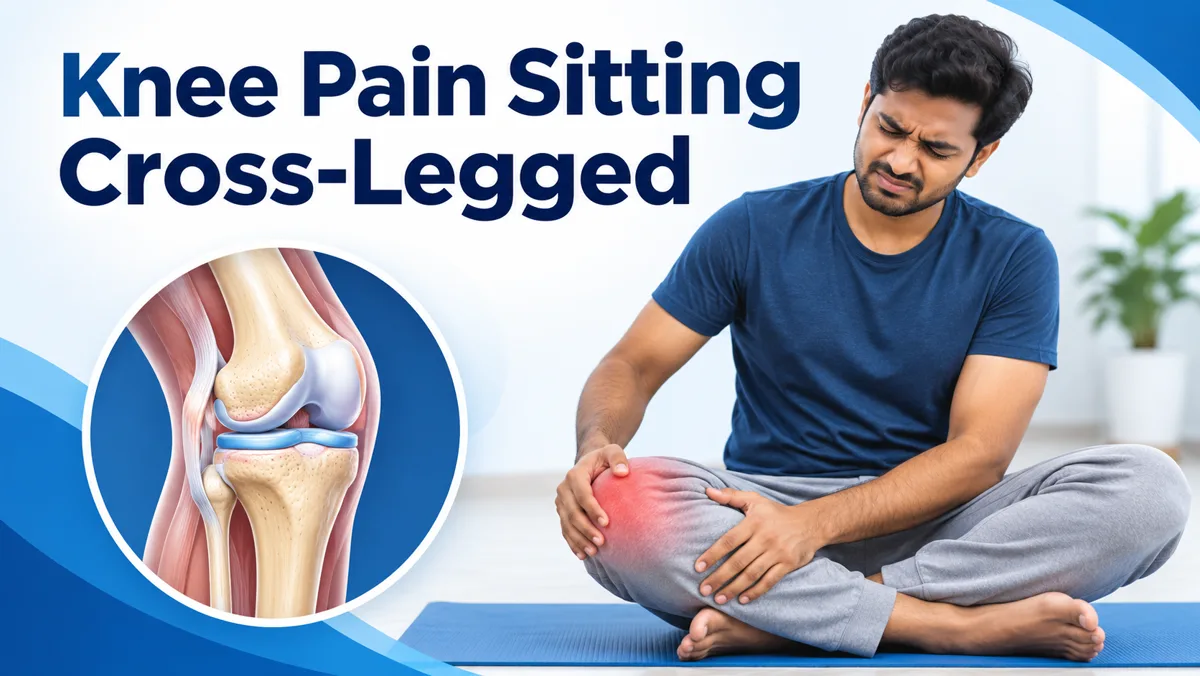
Knee Pain Sitting Cross-Legged
Sitting cross-legged is part of daily life for many people. It may happen during a meal, prayer, yoga or time on the floor with children. If one knee hurts while entering the position or when standing up afterward, the pain can be worrying. The position bends the knee deeply and may add rotation. That can make an existing problem noticeable, but it does not identify a diagnosis by itself. The location of pain, swelling, injury history and ability to walk normally matter more than the posture alone.
This article addresses pain specifically linked to cross-legged sitting. For a broader overview of knee osteoarthritis or meniscus-tear symptoms, see Dr Anshul Goel's separate guides. A person with new severe pain, inability to bear weight or a hot swollen joint should seek timely medical assessment rather than test the posture repeatedly.
What the position asks the knee to do
Cross-legged sitting combines knee flexion with movement at the hip and some rotation through the leg. The amount of bend varies from person to person. If the hip is stiff, the knee may take more of the movement than feels comfortable. Existing inflammation, limited motion, a previous injury or weakness around the hip and thigh may make the position difficult. Pain while lowering to the floor can have a different explanation from pain only when standing up after a long sitting period.
Try to note exactly where the pain occurs: in front of the kneecap, along the inner or outer joint line, behind the knee or around a tendon. Also note whether there was a twisting injury, a pop, swelling later that day, locking or a sense that the knee gives way. These details help an orthopedic clinician decide whether the concern is likely to involve a joint surface, meniscus, ligament, tendon or another structure. They are not a reliable way to self-diagnose at home.
Common explanations to discuss
Pain at the front of the knee can reflect patellofemoral irritation, especially if stairs, squats or prolonged sitting also provoke it. The kneecap moves against the thighbone as the knee bends, and symptoms can vary with strength, activity and joint mechanics. A clinician should assess the whole leg rather than assume all front-of-knee pain is the same condition.
Pain along a joint line after a twist, particularly with swelling, catching or locking, may raise concern for a meniscus injury. The NHS meniscus guidance describes pain and swelling that may emerge after injury, along with movement difficulty. Not every painful bend means a tear, and not every meniscus finding on an MRI needs surgery. Examination and the person's goals guide what happens next.
Osteoarthritis may cause stiffness, reduced motion and activity-related pain, particularly as people get older or after previous injury. It can make deep flexion uncomfortable, but an X-ray appearance and symptoms do not always match perfectly. Other causes include bursitis, tendon problems, inflammatory arthritis and referred pain from the hip or back. A swollen, red or feverish joint needs a different level of attention because infection or inflammatory disease must be considered.
When is it safe to change the position and observe?
If discomfort is mild, began without injury and settles promptly when you change position, it is reasonable to avoid forcing deep flexion while you observe the pattern. Use a chair, raise the seating surface or keep one leg less bent. Do not stretch through sharp pain to prove that the joint is flexible. Gentle everyday movement is usually more helpful than complete inactivity, but the right amount depends on the cause. The NHS knee-pain guide advises medical review when pain persists or is accompanied by concerning signs.
An ice pack wrapped in cloth may help after an irritated episode; avoid direct skin contact and follow safe time limits. Discuss pain medicines with a clinician or pharmacist if you have kidney disease, stomach ulcers, take blood thinners or have other medical considerations. A support sleeve may feel comfortable for some people, but it does not diagnose or repair a structural problem. If you repeatedly need to compensate with the other leg or use your hands to rise, an assessment is more useful than continuing to work around the pain.
Red flags that change the plan
Seek urgent assessment if the knee is badly swollen or visibly changed in shape, you cannot put weight on it, it locks and will not straighten, or you have fever with a hot red joint. A major fall, twisting injury with rapid swelling, or new numbness also warrants prompt care. The NHS knee-pain advice lists these as reasons not to wait for routine recovery. A painful knee after joint replacement should be discussed with the operating team, especially with swelling, warmth or fever.
Less urgent but still important reasons for a visit include pain lasting more than a few weeks, recurring swelling, reduced confidence on stairs and repeated pain each time you sit on the floor. These patterns may benefit from examination and a tailored rehabilitation plan. Early assessment can clarify what activities can continue safely and whether imaging is likely to change care.
What an orthopedic visit may include
The clinician usually asks about the first episode, exact pain location, swelling, locking, instability, activity and previous surgery. They may examine the hip, knee and ankle, check range of motion, strength and tenderness, and reproduce symptoms carefully. The aim is to understand the mechanism and rule out more serious conditions. An X-ray can be useful when arthritis, injury or alignment is a concern. MRI is generally reserved for questions it can help answer, such as a suspected internal injury after examination.
Imaging should not replace the clinical story. Many middle-aged adults have MRI findings that do not fully explain symptoms. Likewise, a report that mentions joint-space narrowing does not automatically mean knee replacement. Dr Goel's guide on knee joint-space findings on X-ray explains why the image needs context. If treatment is needed, it may begin with activity changes, physiotherapy and strength work, with procedures considered only for selected cases.
Return to floor sitting with a practical plan
If the condition is suitable for rehabilitation, the plan may target comfortable knee motion, quadriceps and hip strength, balance and a gradual return to the movement that matters to you. A physiotherapist can adjust the position and progression rather than hand out a generic exercise list. The objective is not to force everyone to sit cross-legged. It is to restore useful function without provoking repeated symptoms.
You may decide to alternate between a chair and the floor, use a cushion, change the duration or place one leg differently. Check how the knee feels later that day and the next morning. Recurring swelling or worsening pain after a modification suggests that the plan needs review. Treatment should respond to the person and the condition, not to a rule that all floor sitting is good or bad.
Frequently asked questions
Does cross-legged sitting damage the knee?
The posture does not automatically damage a healthy knee. Pain in that position can reveal a problem or a movement limit that deserves attention, especially when it recurs or comes with swelling.
Is knee pain in this posture always arthritis?
No. Front-of-knee pain, meniscus problems, tendons, inflammation and hip stiffness may also contribute. The location, injury history and examination help distinguish them.
Do I need an MRI immediately?
Usually an examination comes first. Imaging is chosen when it is likely to answer a specific clinical question or change treatment. Urgent signs are assessed promptly by a medical professional.
Can I keep doing yoga or floor exercises?
Avoid movements that repeatedly cause sharp pain or swelling until you know why. Many people can continue modified activity, but the safe range depends on the diagnosis and symptoms.
Will physiotherapy help?
It can help many non-emergency knee problems by addressing strength, movement and activity tolerance. The exercises and pace should be tailored after assessment, not copied from a generic video.
For persistent knee pain in Delhi, contact Dr Anshul Goel for an orthopedic evaluation. This article is educational and cannot diagnose the cause of one person's pain.
Related Articles
Knee Buckling Without Pain: Causes and Next Steps
Knee giving way without pain can have several causes. Learn the warning signs, possible tests and when to seek an orthopaedic review.
Tennis Elbow vs Golfer's Elbow
Tennis elbow and golfer’s elbow explained: pain location, causes, diagnosis, rehabilitation and when to see an orthopedic doctor.
Leg Length After Hip Replacement
Why a leg may feel longer after hip replacement, how surgeons measure the difference, and when therapy or a lift may help.