6 min read
Numbness After Knee Replacement: What Is Normal?
A numb patch beside a knee replacement scar is common. Learn what patterns may be expected and which changes need prompt surgical review.
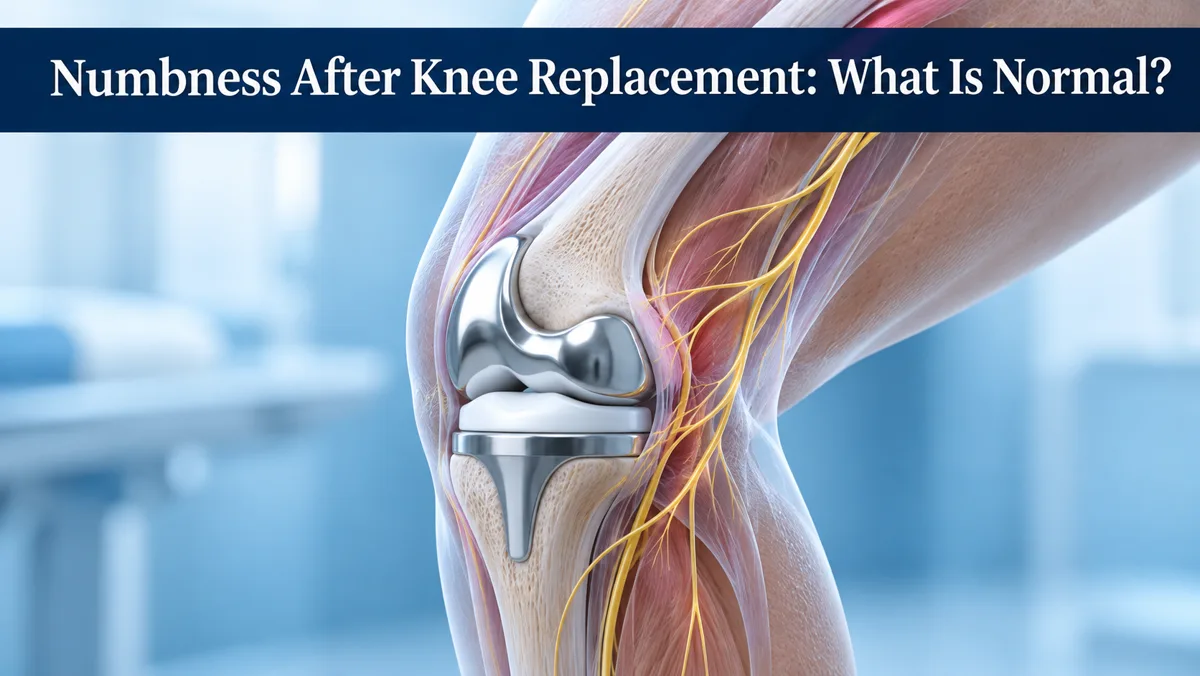
A numb patch beside a knee replacement scar can be surprising, especially when walking and bending are improving. Small skin nerves cross the area where the surgeon makes the incision, so a change in sensation around the scar is common. The pattern matters, though. A stable patch next to the incision is different from new numbness spreading down the leg, weakness in the foot, or a cold, pale limb.
This article explains what people commonly notice after surgery, which changes should be reported, and what to ask at follow-up. It does not diagnose a nerve injury from a description. Follow your own surgeon's instructions, particularly if your operation, anesthesia, or recovery has been unusual.
Why does the skin feel numb?
The incision and surrounding tissue work can disturb small superficial nerves that carry feeling from the skin near the knee. NHS patient guides describe numbness around the incision as common after total knee replacement. The area may feel less sensitive, tingly, or strange when clothing touches it. This is different from the joint implant being loose or failing.
Nerves can recover slowly, and the sensation may improve over months. Some people retain a small area of altered feeling long term. The size, location, and trajectory vary. A surgeon can explain what is expected for your particular incision and procedure. Do not use a stranger's recovery timeline as a guarantee for your own.
What is a common pattern?
A localized patch near one side of the scar, present soon after surgery and not spreading, is a familiar pattern. You may notice it more when the swelling decreases and you begin touching or washing the area. The scar itself can be sensitive even when nearby skin feels numb. Gentle contact may feel unusual, but that does not automatically mean something is wrong.
Tell your surgeon at a routine follow-up so the area can be examined and documented. Keep note of whether the patch is shrinking, stable, or expanding. A simple sketch can help when describing it. Our separate guide to the knee replacement recovery timeline covers walking, stairs, and function; sensation around the scar is a narrower question.
When might numbness need prompt review?
New numbness after an initial period of normal sensation, rapid spread, severe burning pain, or weakness deserves earlier assessment. Inability to lift the foot, a foot that becomes cold, pale, blue, or unusually painful, or new trouble moving the ankle is not the typical small scar patch. Seek urgent help in these situations, especially if circulation appears affected. Do not wait for a routine appointment.
If numbness appears with worsening wound redness, drainage, fever, or increasing knee pain and swelling, contact the surgical team promptly. These symptoms may indicate a complication that needs assessment, even if the numbness has another explanation. Our article on knee replacement infection warning signs provides additional context.
Could the anesthesia be involved?
Spinal anesthesia or a nerve block can cause temporary altered feeling immediately after surgery. The anesthesia team and ward monitor return of movement and sensation. A persistent or new problem after discharge should be discussed with the surgical team rather than attributed automatically to the block. The timeline, distribution, and accompanying weakness help identify what needs examination.
Some people also have prior nerve problems from diabetes, the spine, or another condition. A surgeon may compare both legs and ask about symptoms present before surgery. This is why the history matters: a small patch beside the incision and tingling in both feet may have different explanations.
Does numbness mean the implant is loose?
Usually no. Superficial numbness relates to skin nerves, while implant problems involve a different assessment of pain, stability, alignment, and imaging. If you have increasing joint pain, buckling, or a new change in walking, tell your surgeon, but do not infer implant failure from a scar patch alone. Our guide to revision knee replacement discusses why a painful or failed implant is evaluated separately.
The presence of numbness also does not mean you should stop rehabilitation. Continue the exercises and activity progression prescribed by your team unless they advise a change. Protect a numb area from heat, pressure, or rubbing because reduced feeling may make an injury less noticeable.
How should you care for the area?
Follow your team's wound and scar instructions. Do not massage or apply creams to an unhealed incision. Once healing is complete, a physiotherapist may suggest gentle desensitization if the scar is unusually sensitive. The goal is comfort and function, not forcing sensation to return. Report a new blister, burn, or skin break because you may not feel it normally.
Avoid heating pads directly over numb skin. If you use cold packs for swelling, protect the skin and follow your surgeon's time and placement advice. A numb area may not warn you that the temperature is too extreme. These precautions are practical even when the sensation change is otherwise expected.
What should you ask at follow-up?
Show the surgeon exactly where the numbness begins and ends. Ask whether it matches a common incision-related pattern, whether movement and blood flow are normal, and what changes would require earlier review. Ask how long to monitor it and whether any scar care or therapy is appropriate. If there is pain as well as numbness, describe whether it is burning, shooting, deep in the joint, or localized to the scar.
Recovery should be judged through function, pain, wound healing, strength, and safe walking, not only by the return of every patch of skin sensation. A clear explanation can make an odd but common symptom less alarming while still identifying the exceptions that matter.
Sensation and function are different outcomes
It is possible to walk well while a small part of the skin remains numb. It is also possible to have normal skin sensation but persistent joint stiffness. At follow-up, discuss both separately. If your rehabilitation is progressing, record walking distance, knee bend, swelling, and confidence on stairs. If your sensation changes, sketch the boundary of the numb area and note any weakness or burning pain. This makes the conversation more precise than saying the whole knee feels odd. A clinician can then decide whether the finding matches expected superficial nerve change or needs a different workup.
Frequently asked questions
Is numbness next to a knee replacement scar common?
Yes. Small superficial nerves can be affected by the incision, and a localized area of altered sensation is common. Tell your surgeon so it can be assessed in context.
Will the numb patch go away completely?
It may improve over months, but some altered sensation can persist. The course varies by person and operation.
Should I worry if my foot feels numb too?
New or spreading foot numbness, especially with weakness or color change, needs prompt assessment. It is different from a stable patch beside the knee scar.
Can I use a heating pad on numb skin?
Avoid direct heat because reduced sensation increases the risk of burns. Ask your care team about safe pain and swelling measures.
Does numbness mean the replacement has failed?
No. A small scar-area sensory change does not by itself indicate implant failure. New pain, instability, or other concerning symptoms should still be reviewed.
Sources
Related Articles
Hip Pain When Lying on Your Side
Hip pain when lying on your side often involves the outer hip. Learn possible causes, sleep-position tips, and when an orthopedic review is needed.
Ankle Pain Without Injury
Ankle pain can begin without a twist. Learn possible causes, self-care, and warning signs that need orthopedic assessment.
Wrist Pain When Lifting Weights
Wrist pain during a press, curl or push-up may be a simple response to an unfamiliar load, but it can also indicate a tendon, ligament or bone injury. The location, the movement that triggers it and whether there was a f