6 min read
Wrist Pain When Lifting Weights
Wrist pain during a press, curl or push-up may be a simple response to an unfamiliar load, but it can also indicate a tendon, ligament or bone injury. The location, the movement that triggers it and whether there was a f
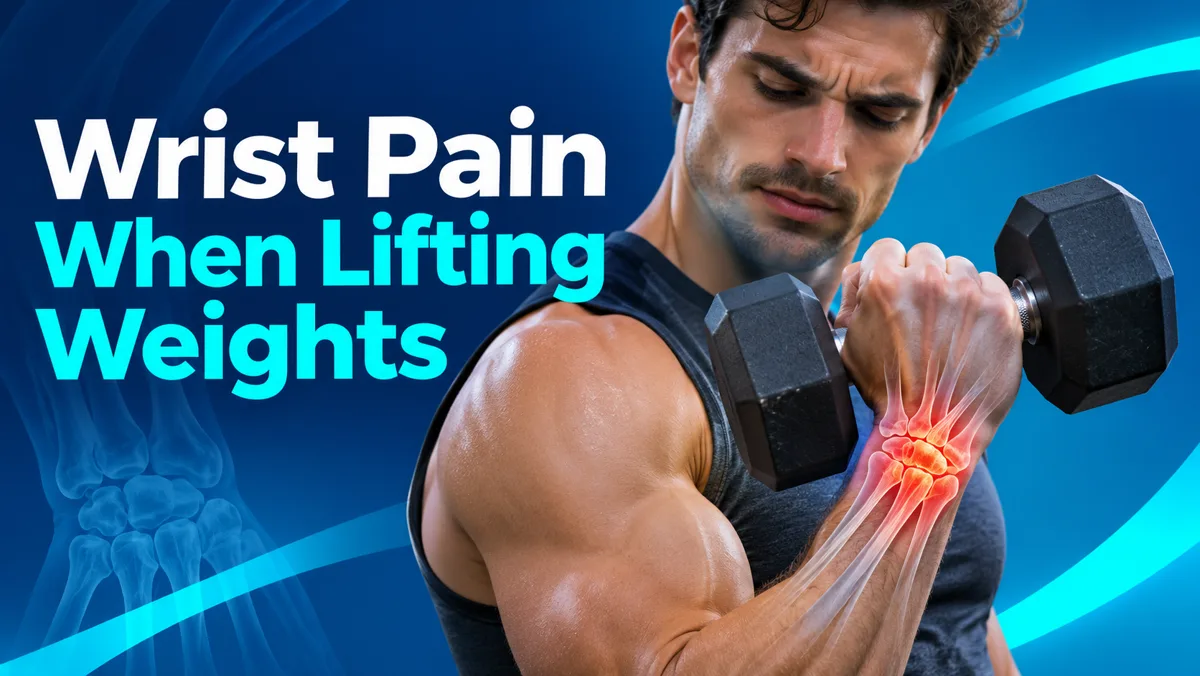
Wrist Pain When Lifting Weights
Wrist pain during a press, curl or push-up may be a simple response to an unfamiliar load, but it can also indicate a tendon, ligament or bone injury. The location, the movement that triggers it and whether there was a fall or sudden twist help narrow the cause. Continuing to lift through sharp pain without understanding the problem may make it harder to recover. An orthopedic assessment can determine whether activity changes and rehabilitation are enough or whether imaging is needed.
Where does the wrist hurt?
Pain on the thumb side can involve tendons, the base of the thumb or, after a fall, the scaphoid bone. Pain on the little-finger side can involve the triangular fibrocartilage complex, tendons or other structures. Pain across the back of the wrist may be related to loading in extension, as during a push-up. These are examples, not a self-diagnosis guide. A clinician will also ask about swelling, clicking, numbness, loss of grip strength and instability.
Write down which exercise hurts, whether the wrist is bent backward or sideways, and whether symptoms appear during the set or afterward. Note when training volume or grip style changed. A new wrist wrap may reduce discomfort without resolving the source of pain. If there was a sudden pop or fall, describe it clearly. The NHS wrist pain guide emphasizes that several conditions can share similar symptoms, so examination matters.
Could it be a tendon problem?
Tendons can become irritated when load increases faster than the tissue can adapt. Repeated gripping, curling or wrist extension may provoke pain. A tendon problem often responds to a planned reduction in provoking load followed by gradual strengthening, but the plan depends on the exact tendon and the person. Complete rest for weeks is not always the best strategy, and repeatedly testing a painful heavy lift is not rehabilitation.
The clinician or physiotherapist may review how you hold the weight, the angle of the wrist and the movements that reproduce symptoms. Sometimes changing to a neutral grip or reducing load temporarily helps. The goal is to keep you active safely while the wrist recovers. Do not treat a training video as proof of a particular diagnosis; the same movement can aggravate different structures.
What is a TFCC injury?
The triangular fibrocartilage complex is a group of structures on the little-finger side of the wrist that helps stabilize the joint. A twisting injury or repeated loading can be associated with pain there. Symptoms may include clicking or pain when rotating the forearm or pushing through the hand. This pattern is not specific. The NCBI review of TFCC injuries describes clinical features, but an examination is needed to distinguish a TFCC problem from a tendon or other cause.
Management may include modifying activity, a support for a defined period, therapy or a procedure in selected cases. An MRI is not automatically necessary for every sore wrist, and a scan finding must match symptoms. If grip strength is deteriorating, pain persists or the wrist feels unstable after an injury, seek an orthopedic review rather than indefinitely changing exercises on your own.
Do not miss a fracture after a fall
Pain near the base of the thumb after falling onto an outstretched hand can be a scaphoid fracture. The AAOS notes that this injury may not always be obvious from appearance alone. Do not resume lifting simply because swelling is modest. Prompt assessment matters because some wrist fractures need immobilization or further imaging even if the first X-ray is unclear. A clinician can examine the tender area and decide what test or follow-up is appropriate.
Deformity, severe swelling, inability to move the wrist or fingers, numbness, or a cold or pale hand after trauma needs urgent care. A wrist injury may also occur during sport without a dramatic fall. Our sports injury recovery guide explains how treatment decisions are made once the injury is identified.
What can you change immediately?
Stop the exercise that produces sharp pain. Reduce load and avoid positions that clearly worsen symptoms until you have a plan. You may be able to continue lower-body training or other activity that does not load the wrist, but choose based on comfort and clinician advice. Ice wrapped in a cloth can help short-term discomfort. Medication decisions depend on medical history, including kidney disease, ulcers and blood thinners.
Do not strap the wrist tightly enough to cause tingling or color change. A support may be useful for a specific injury, but it is not a universal fix. If symptoms are mild and clearly related to a recent training increase, a short period of modification may help. If pain recurs as soon as you lift again, the cause and progression need review. A return-to-training plan should be guided by function, not simply a date on the calendar.
When should you seek a specialist opinion?
Seek care after trauma, with swelling or marked tenderness, with loss of grip, numbness, locking, instability or symptoms that persist despite sensible load changes. Tell the clinician what you lift, how often and which movement triggers pain. Bring any earlier images and a list of treatments tried. The examination can direct whether X-rays, ultrasound or MRI would change management.
Some wrist pain is linked to elbow or forearm mechanics. Our tennis elbow versus golfer's elbow guide covers a different location and can help you describe whether pain is actually centered near the elbow. The aim is to identify the tissue causing symptoms rather than treating every lifting-related pain as a generic strain.
Returning to weights
When symptoms improve, restart with a load and range that the wrist tolerates. Increase gradually and watch whether pain is worse later that day or the following morning. A therapist may use grip, strength and movement tests to guide progression. Do not compare your timetable with another lifter's, because the diagnosis and severity may differ. A return plan also considers the technique and volume that may have contributed to symptoms.
If the wrist repeatedly flares despite a careful progression, revisit the diagnosis. Some structural injuries need a different plan. Recovery is not measured only by whether you can complete one workout; everyday tasks, grip and confidence matter too. A clear assessment can keep a small problem from becoming a long interruption to training.
Frequently asked questions
Is wrist pain during lifting always a sprain?
No. Tendons, ligaments, bone and nerves can cause pain. The location, injury history and examination help identify the source.
Can I keep lifting with a wrist wrap?
A wrap may change comfort but does not diagnose or treat every cause. Stop if sharp pain, numbness or instability occurs and seek assessment for persistent symptoms.
Do I need an MRI?
Not always. A clinician may begin with examination and sometimes X-rays. MRI is used when it answers a question that changes treatment.
How do I know if it is a scaphoid fracture?
Pain near the thumb base after a fall is a reason for medical assessment. Symptoms alone cannot safely rule a fracture out, and some injuries need follow-up imaging.
When can I return to heavy lifts?
That depends on the diagnosis and recovery of pain-free function and strength. A gradual plan is safer than returning to the previous load on a fixed date.
Sources: NHS wrist pain guide, AAOS scaphoid fracture guide and NCBI TFCC review.
This article is educational, not a diagnosis. For persistent pain or injury assessment, contact Dr Anshul Goel.
Related Articles
Pain on the Outside of the Knee
Pain along the outer edge of the knee can appear during a run, after a twist, or even during ordinary walking. Its location gives a useful clue, but it is not a diagnosis. The outer side contains the iliotibial band, lat
Heel Pain in the Morning
The first few steps after getting out of bed can be sharply painful when the tissues around the heel are irritated. The pain may ease after you move, then return after a long period of standing or sitting. Plantar fascii
Knee Pain Sitting Cross-Legged
Knee pain when sitting cross-legged can have several causes. Learn which symptoms matter, when to change position and when to see an orthopedist.