6 min read
Hip Pain When Lying on Your Side
Hip pain when lying on your side often involves the outer hip. Learn possible causes, sleep-position tips, and when an orthopedic review is needed.
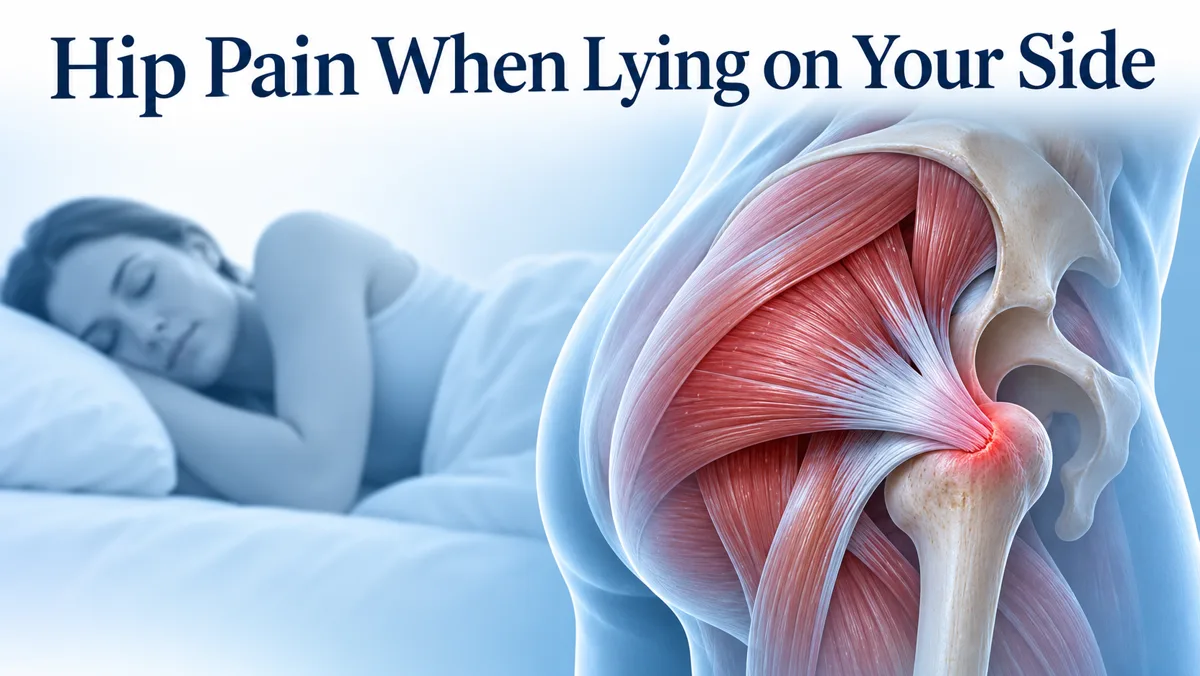
Hip pain that becomes worse when you lie on one side can interrupt sleep long before it limits walking. Many people assume the hip joint itself is damaged or that a replacement will eventually be needed. The location of pain matters. Tenderness over the outside of the hip often reflects irritation of the tissues around the greater trochanter, while pain deep in the groin, back, or buttock may point to other causes.
This guide focuses on side-lying hip pain, especially discomfort on the outer hip. Our separate article on hip pain when walking addresses a different activity pattern. A clinician needs to evaluate persistent pain, because an article cannot confirm the source from symptoms alone.
Why does the outside of the hip hurt at night?
The prominent bone on the side of the upper thigh is the greater trochanter. Gluteal tendons attach nearby, and cushioning tissues help them move. Greater trochanteric pain syndrome, or GTPS, is a term for pain arising from this region. The older term trochanteric bursitis is sometimes used, but tendon irritation can be an important part of the problem. Lying directly on the painful side compresses sensitive tissues and may make symptoms more noticeable at night.
GTPS can also make stairs, uphill walking, getting out of a low chair, or standing on one leg uncomfortable. Pain may travel down the outer thigh without reaching the foot. These features are common but not unique. An orthopedic assessment should also consider hip osteoarthritis, referred pain from the spine, and other conditions when the story or examination suggests them.
Could the mattress or sleeping position be the cause?
A hard sleeping surface or pressure directly on the tender area can aggravate existing symptoms. Yet a mattress rarely explains every persistent hip problem by itself. People often sleep on their side because it is comfortable for their back or breathing, so the goal is usually to reduce compression rather than demand an impossible sleeping position. Lying on the unaffected side with a pillow between the knees can reduce the pull and compression on the painful side. Sleeping on the back may also be comfortable for some.
Avoid stacking pillows in a way that twists the trunk or leaves the upper leg unsupported. If you wake in pain, change position gently rather than repeatedly pressing on the sore spot to test it. NHS guidance for GTPS includes avoiding the painful side and using a pillow between the knees, but the best position still depends on your other health needs.
What else can mimic this pattern?
Pain from the hip joint itself often feels deeper in the groin and may limit rotation, though symptom patterns overlap. Lumbar spine conditions can refer pain to the buttock or thigh, sometimes with tingling or numbness. A fracture after a fall, infection, inflammatory disease, or less common bone problem requires a different approach. In someone with a previous hip replacement, new pain needs assessment in that surgical context.
Tell the clinician about falls, fever, unexplained weight loss, severe night pain unrelated to position, new weakness, and inability to bear weight. These details help identify when imaging or urgent evaluation is appropriate. Do not label all outer hip pain as bursitis simply because the area is tender.
Why might this start without an injury?
Tendons can become irritated after a change in loading, even if there was no accident. A new walking program, prolonged standing, repeated stairs, or exercises with too much side-hip load may contribute. Hip muscle weakness and movement habits can influence how the area is stressed. Some people develop symptoms gradually during a period of reduced activity and then notice them when they resume normal walking.
The useful question is what changed in the weeks before pain began. Note whether the pain follows a particular route, workout, sitting position, or sleep side. A brief diary can help identify a pattern without forcing you to stop every activity.
What can you try before an appointment?
Reduce direct pressure on the painful outer hip and temporarily limit activities that cause a strong or prolonged flare. Keep comfortable movement in your day, because complete rest can reduce strength. Use a pillow between the knees when lying on the non-painful side. If you use pain medicine, check with a clinician or pharmacist, particularly if you have kidney, stomach, heart, or blood pressure concerns.
Avoid aggressive stretching into pain or repeatedly massaging the most tender spot. A physiotherapist may guide a gradual strengthening program for the hip and surrounding muscles. Progress should be based on function and how symptoms respond, not on a fixed number of exercises copied from the internet.
When should an orthopedic specialist assess it?
Arrange a review if pain lasts more than a short period, keeps disturbing sleep, changes your walking, or repeatedly returns after you resume activity. A clinician will ask about the pain site, examine hip and back movement, and assess strength and tenderness. Many cases can be assessed clinically without immediate MRI. Imaging may be useful when the diagnosis is uncertain, the symptoms are severe or atypical, or treatment has not helped.
Seek urgent care after a fall if you cannot bear weight, or with fever, a hot swollen joint, or rapidly worsening severe pain. Our broader guide to when to see an orthopedic surgeon explains other reasons for review. If you have been told you have hip arthritis, when hip replacement is necessary is a separate decision and should not be inferred from side-lying pain alone.
How is recovery judged?
The aim is to sleep more comfortably, walk without a significant flare, and return to valued activities. Improvement may take time, particularly if the problem developed gradually. A plan usually combines load adjustment with progressive strengthening and review. If a clinician recommends an injection or another procedure, ask what diagnosis it addresses, how long benefit may last, and what rehabilitation remains important afterward.
Keep track of sleep interruption, stairs, walking distance, and the response to exercises. These are practical outcome measures. A scan finding may stay visible even when function improves, so the clinical goal is not simply to make an image look normal.
Frequently asked questions
Is hip pain when lying on my side always bursitis?
No. GTPS may involve tendons as well as a bursa, and hip joint or spine problems can mimic it. An examination can clarify the likely cause.
Can I sleep on the opposite side?
Often yes, with a pillow between the knees if comfortable. Avoid a position that creates new pain or conflicts with other medical needs.
Do I need an MRI for lateral hip pain?
Not always. History and examination often guide initial care. Imaging is considered when symptoms or the clinical findings make it useful.
Does this mean I need a hip replacement?
No. Side-lying outer hip pain commonly involves surrounding soft tissue. Replacement decisions relate to a different assessment of joint disease and function.
When is side-lying hip pain urgent?
Seek urgent help for inability to bear weight after a fall, fever with severe joint pain, or rapidly worsening symptoms. Persistent sleep-disrupting pain deserves a planned review.
Sources
Related Articles
Ankle Pain Without Injury
Ankle pain can begin without a twist. Learn possible causes, self-care, and warning signs that need orthopedic assessment.
Wrist Pain When Lifting Weights
Wrist pain during a press, curl or push-up may be a simple response to an unfamiliar load, but it can also indicate a tendon, ligament or bone injury. The location, the movement that triggers it and whether there was a f
Pain on the Outside of the Knee
Pain along the outer edge of the knee can appear during a run, after a twist, or even during ordinary walking. Its location gives a useful clue, but it is not a diagnosis. The outer side contains the iliotibial band, lat