5 min read
Frozen Shoulder Treatment Time: How Long It Takes to Recover and What Helps
Learn how long frozen shoulder takes to recover, the different stages of healing, treatment options, physiotherapy, FAQs, and when surgery may be needed.
Frozen Shoulder Treatment Time: How Long It Takes to Recover and What Helps
If shoulder pain has gradually made it difficult to lift your arm, comb your hair, reach overhead, or even sleep comfortably, you may be experiencing frozen shoulder. Also known as adhesive capsulitis, frozen shoulder causes pain and progressive stiffness that can significantly affect your daily routine.
One of the most common questions patients ask is, "How long does frozen shoulder take to heal?" The answer depends on the stage of the condition, how early treatment begins, and whether you follow the recommended rehabilitation plan. While recovery takes time, proper treatment can reduce pain, restore movement, and help prevent long-term stiffness.
If you're experiencing persistent shoulder pain or reduced mobility, learn more about our Shoulder Treatment services to understand the treatment options available.
What Is Frozen Shoulder?
Frozen shoulder is a condition in which the capsule surrounding the shoulder joint becomes inflamed and gradually thickens. Over time, the capsule tightens, restricting movement and causing significant pain.
Unlike a sudden shoulder injury, frozen shoulder usually develops slowly over several weeks or months. Patients often notice mild pain initially, followed by increasing stiffness that makes everyday activities difficult.
The condition most commonly affects adults between the ages of 40 and 60 and is more frequently seen in people with diabetes, thyroid disorders, or after prolonged shoulder immobilization following surgery or injury.
What Causes Frozen Shoulder?
Doctors don't always know the exact cause, but several factors increase the risk of developing frozen shoulder.
Diabetes
Shoulder injury
Previous shoulder surgery
Long periods of immobilization
Rotator cuff injuries
Thyroid disorders
Increasing age
Early treatment of shoulder problems can often reduce the likelihood of developing frozen shoulder later.
Symptoms of Frozen Shoulder
Symptoms usually develop gradually and worsen over time.
Persistent shoulder pain
Difficulty lifting the arm
Stiffness while reaching overhead
Pain that worsens at night
Reduced range of motion
Difficulty dressing or combing hair
If shoulder pain persists for several weeks or begins affecting daily activities, an orthopedic evaluation is recommended rather than waiting for symptoms to improve on their own.
How Long Does Frozen Shoulder Take to Recover?
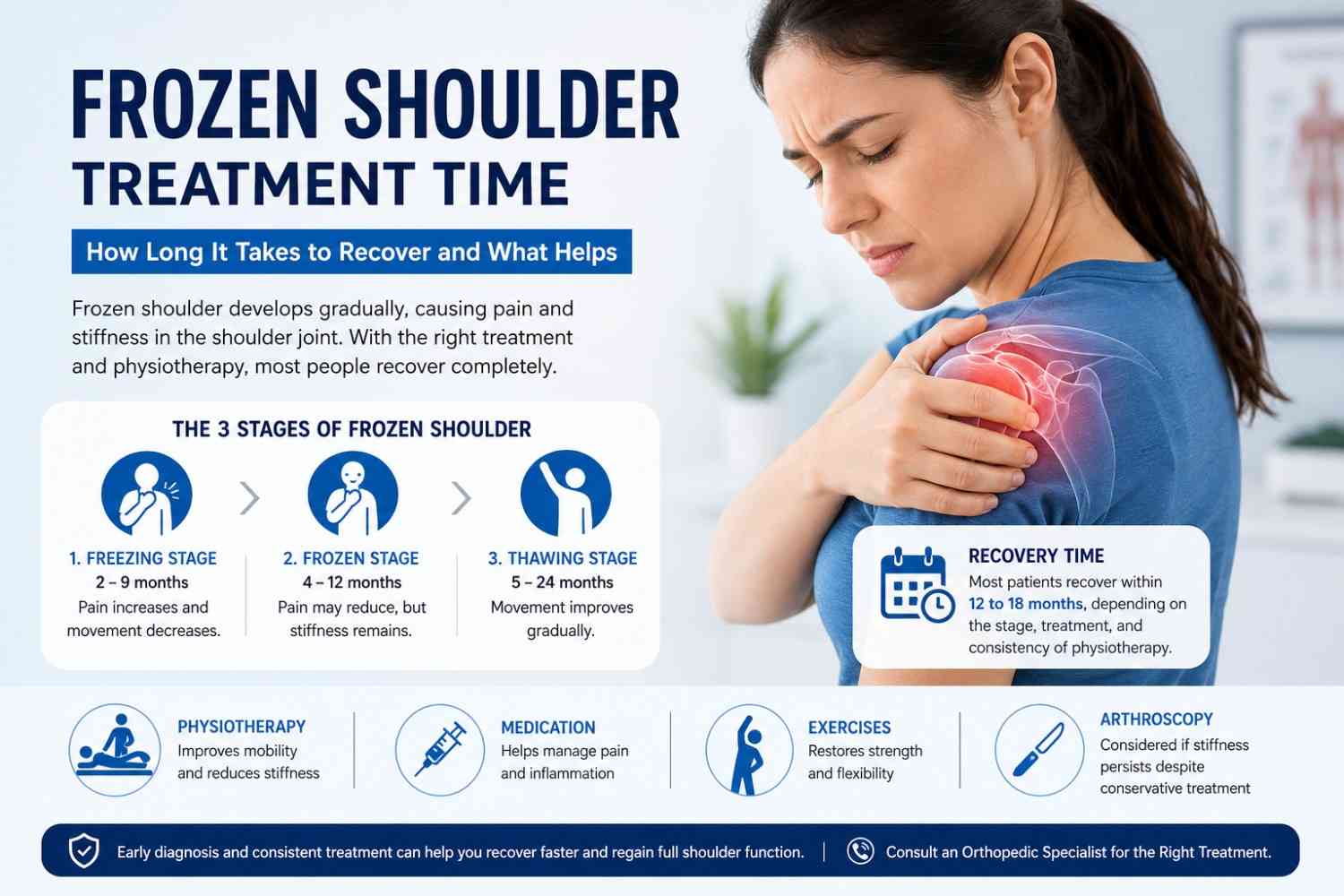
Recovery is usually measured in months rather than weeks. Most patients recover within 12 to 18 months, although some improve earlier with timely treatment and physiotherapy.
Frozen shoulder typically progresses through three stages.
Stage 1: Freezing Stage
This stage usually lasts between 2 and 9 months. Pain gradually increases while shoulder movement becomes progressively restricted.
Stage 2: Frozen Stage
Pain often becomes less severe, but stiffness reaches its maximum. This phase commonly lasts 4 to 12 months.
Stage 3: Thawing Stage
During this phase, shoulder movement gradually improves. Recovery continues slowly over several months until normal or near-normal movement returns.
Beginning treatment during the early stages often leads to better outcomes and may shorten overall recovery time.
Can Frozen Shoulder Heal Without Surgery?
Yes. Most patients recover successfully without surgery. Conservative treatment remains the first choice because the condition often responds well to physiotherapy, medications, and guided exercises.
Non-surgical treatment usually includes:
Physiotherapy
Stretching exercises
Pain-relieving medications
Anti-inflammatory medicines
Activity modification
Occasionally, corticosteroid injections
The earlier treatment begins, the greater the chance of avoiding prolonged stiffness.
Why Physiotherapy Is the Most Important Treatment
Physiotherapy is considered the cornerstone of frozen shoulder treatment. Carefully designed stretching and strengthening exercises gradually improve shoulder flexibility while reducing stiffness.
Patients who consistently perform supervised exercises generally recover faster than those who rely only on medications.
When Is Surgery Considered?
Although surgery is rarely needed, it may be recommended when severe stiffness persists despite several months of conservative treatment.
In selected patients, Arthroscopy Surgery may be performed to release the tightened shoulder capsule and restore movement. Since arthroscopy is minimally invasive, recovery is generally quicker than traditional open surgery.
Tips That Can Improve Recovery
Patients can improve their recovery by combining medical treatment with healthy daily habits.
Attend physiotherapy sessions regularly.
Perform home exercises consistently.
Avoid prolonged shoulder immobilization.
Control diabetes and other medical conditions.
Maintain good posture while sitting and working.
Follow your orthopedic surgeon's recommendations.
Recovery cannot be rushed, but consistency plays a major role in achieving better shoulder movement.
When Should You See an Orthopedic Specialist?
If your shoulder pain lasts for more than two to three weeks, movement continues to decrease, or daily activities become difficult, you should consult an orthopedic specialist. Early diagnosis often leads to better recovery and may prevent prolonged stiffness.
Ignoring frozen shoulder can allow stiffness to worsen over time, making rehabilitation longer and more challenging.
If you're experiencing persistent symptoms, you can book a consultation for a detailed evaluation and personalized treatment plan.
Frequently Asked Questions
1. How long does frozen shoulder take to recover?
Most patients recover within 12 to 18 months. However, early diagnosis, physiotherapy, and appropriate treatment can improve symptoms sooner and help restore shoulder movement more effectively.
2. Can frozen shoulder heal without surgery?
Yes. Most cases improve with physiotherapy, stretching exercises, medications, and activity modification. Surgery is considered only when conservative treatment fails to restore movement.
3. Is physiotherapy necessary for frozen shoulder?
Yes. Physiotherapy is one of the most effective treatments for frozen shoulder because it gradually improves flexibility, reduces stiffness, and restores shoulder function.
4. When is arthroscopy recommended for frozen shoulder?
If pain and stiffness continue despite several months of non-surgical treatment, your orthopedic surgeon may recommend arthroscopic shoulder surgery to release the tightened capsule and improve movement.
5. Can frozen shoulder come back?
Recurrence in the same shoulder is uncommon after complete recovery. However, some patients may develop frozen shoulder in the opposite shoulder, especially if they have diabetes or other risk factors.
6. When should I see an orthopedic doctor for frozen shoulder?
If shoulder pain, stiffness, or reduced movement persists for more than a few weeks or starts interfering with your daily routine, consult an orthopedic specialist. You can schedule an appointment here.
Final Thoughts
Frozen shoulder is a painful but treatable condition. Although recovery may take several months, most patients regain significant shoulder function with early diagnosis, physiotherapy, and appropriate medical care. Patience, consistency, and following your rehabilitation program are the keys to achieving the best outcome.
Treatment should never be delayed simply because shoulder pain seems manageable. Early intervention often reduces recovery time and prevents long-term stiffness that can affect your work, sleep, and everyday activities.
If you're experiencing shoulder pain, stiffness, or difficulty moving your arm, explore our Shoulder Treatment services, learn about minimally invasive Arthroscopy Surgery when appropriate, or book a consultation for a personalized treatment plan.
Related Articles
X-Ray में Knee Joint Space कम लिखा है तो क्या मतलब है? क्या Knee Replacement जरूरी है?
Knee X-ray में joint space कम होने का अर्थ, osteoarthritis की grading, symptoms से संबंध और knee replacement कब जरूरी हो सकती है, आसान हिंदी में समझें।
Revision Knee Replacement: Why Knee Implants Fail and When Revision Surgery Is Needed
Learn why knee implants can fail, the warning signs of loosening or infection, and when revision knee replacement may be necessary.
Ankle Sprain Recovery Timeline: Walking to Sport
A practical ankle sprain recovery timeline covering early care, safe walking, exercises, return to running, and signs that may indicate a fracture.