7 min read
Return to Sport After ACL Surgery: Readiness Tests
When can athletes return to sport after ACL reconstruction? Understand strength, hop, movement and psychological readiness tests.
Return to Sport After ACL Surgery: Readiness Tests
An athlete can walk normally and still be unready for cutting, pivoting or contact sport after anterior cruciate ligament reconstruction. The graft needs time to incorporate, and the person must rebuild strength, control and confidence. A calendar date alone cannot answer whether the knee is ready. Returning too soon may increase the risk of another injury, while unnecessary delay can disrupt work, fitness and goals.
This guide explains the kinds of evidence surgeons and physiotherapists use to make a return-to-sport decision. It focuses on readiness after reconstruction. Our ACL tear with meniscus injury guide covers how combined injuries may affect the operation and recovery plan. Individual instructions from your treating team take priority over a general article.
Why walking well is only a first step
Ordinary walking is a predictable, mostly straight-line task. Many sports require rapid deceleration, single-leg landing, rotation, reaction to another player and repeated efforts under fatigue. A knee can tolerate walking while still lacking the quadriceps strength or movement control needed for those demands. Absence of pain during daily life is encouraging but not a clearance test.
The surgeon also considers associated meniscus or cartilage procedures. A meniscus repair, for example, may change early loading and exercise progression. The graft type, prior injuries, sport, age and recovery course all matter. The AAOS ACL plain-language guideline describes recovery as individual and commonly spanning many months. It cautions against rushing return while healing and neuromuscular recovery continue.
Time is necessary, but not sufficient
Tissue healing cannot be accelerated just because an athlete passes one strength test. At the same time, waiting a set number of months without restoring function does not make a knee safe. Teams therefore combine a minimum recovery period with clinical findings and functional testing. The exact threshold and timing depend on the procedure and sport; there is no universal date that guarantees safety.
Ask your surgeon for milestones rather than only a target month. These may include full or near-full motion, controlled swelling, a quiet knee after training, strength progress, running tolerance and sport-specific movements. A setback may mean adjusting the plan, not abandoning rehabilitation. The goal is a confident, repeatable progression that the knee tolerates on the day and afterward.
Strength is more than a gym number
Quadriceps weakness is common after ACL reconstruction and can persist after the athlete feels normal. Hamstrings, hips and calves also contribute to movement. A physiotherapist may use dynamometry or other standardized testing to compare limbs and track progress. Limb symmetry is useful, but it has a limitation: the other leg may also have become weaker during recovery. A symmetrical pair of weak legs is not full readiness.
Look at absolute strength, side-to-side difference and performance relative to the person's sport demands. Do not rely only on how much weight someone lifts in an unfamiliar gym exercise. Good testing uses consistent technique and interprets pain, swelling and effort. A plan should then target specific deficits rather than issuing a vague instruction to “get stronger.”
Why hop tests are used
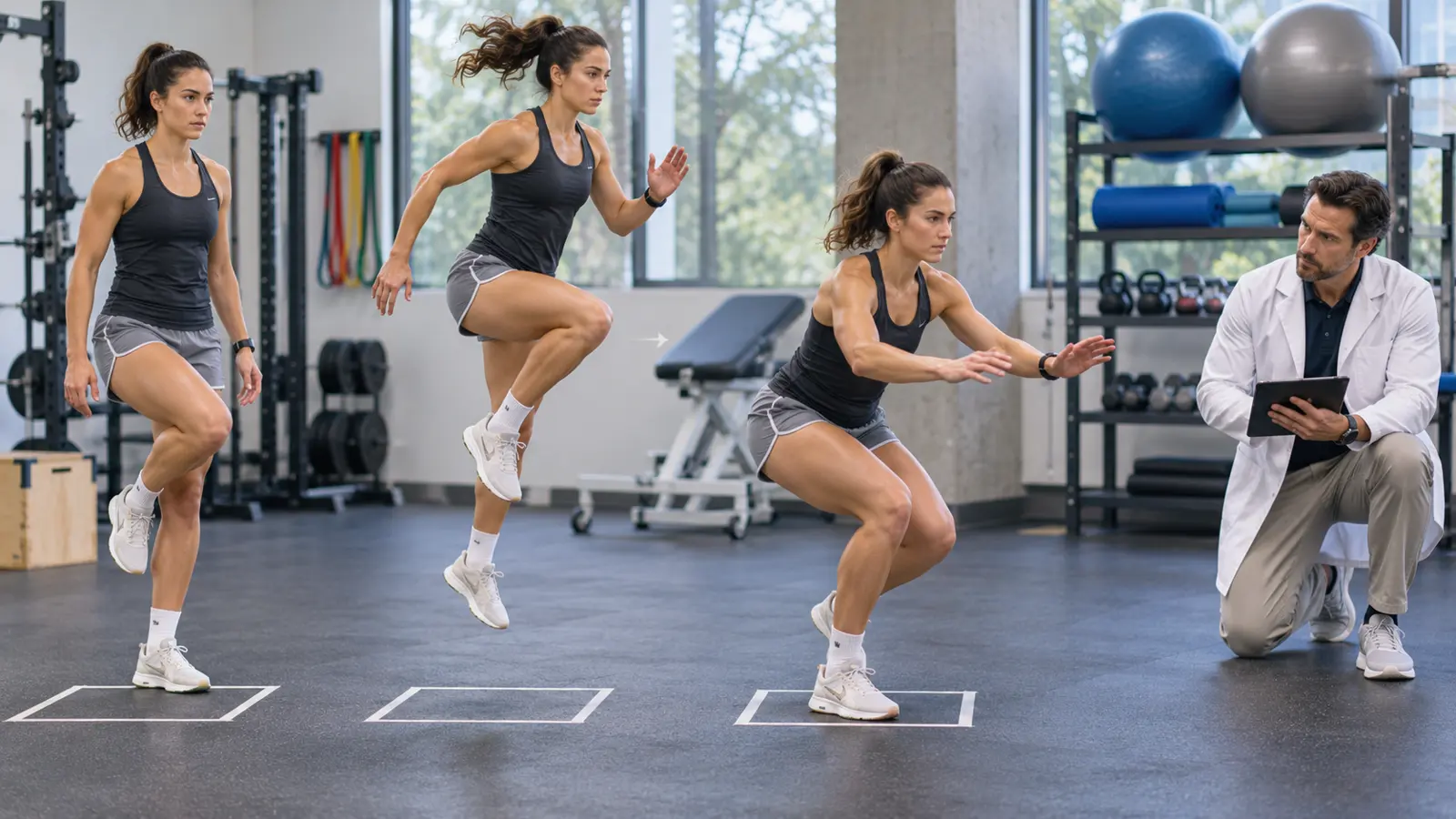
Single-leg hop tests assess aspects of power, landing and confidence. The clinician may measure distance or time and compare sides. However, a person can achieve a similar distance with different mechanics: stiff landing, hip compensation or poor trunk control may hide a deficit. Quality matters alongside the numerical score. Fatigue can expose problems not visible on the first attempt.
Hop testing is not appropriate for every patient at every stage. The clinician introduces it when the knee has enough strength and control. Results are one part of a battery, not a pass or fail certificate by themselves. If the knee swells or hurts after testing, that response informs the next step. Rehabilitation should address the cause before a harder sport drill is added.
Movement quality and sport-specific demands
A footballer, badminton player and distance runner expose the knee to different loads. Return-to-running is not the same decision as return to full competition. The team may progress from walking to jogging, faster straight-line running, planned changes of direction, reactive drills, non-contact practice and then match play. Each stage should be tolerated before the next.
Watch for knee collapse inward, poor balance, hesitation on the surgical side, or asymmetrical landing. These observations need skilled interpretation; one imperfect repetition does not automatically mean danger. The AAOS knee conditioning guide emphasizes structured conditioning and avoiding painful exercise. Sport drills should be chosen with the treating therapist, especially after a combined injury.
Psychological readiness is real
Fear of reinjury can change how an athlete moves or whether they return at all. Confidence should be discussed openly rather than dismissed as lack of motivation. A person may pass a strength test yet hesitate during cutting, or may feel eager to play despite clear physical deficits. Both situations deserve a plan.
Clinicians may use a validated questionnaire and observe how the athlete handles progressively realistic drills. Coaching, graded exposure and clear expectations can help. Psychological readiness does not mean pretending the risk is zero. It means understanding the remaining risk and building the skill and confidence to make a considered return.
Does a brace make return safe?
Some patients feel more secure wearing a brace, and a surgeon may recommend one in particular circumstances. Yet a brace does not replace strength, coordination or healing. The AAOS ACL guidance does not support routine bracing as a proven way to prevent another ACL injury. Discuss the reason for a brace with your treating team instead of buying one as a shortcut to clearance.
Footwear, playing surface and training load also matter. After a long absence, jumping directly into full matches can overload the knee and the rest of the body. A staged return gives the athlete time to regain conditioning and respond to repeated sport exposure. The first game should not be the first time the person has cut, landed or reacted at speed.
What if the knee swells during progression?
Swelling after a new drill may mean the load exceeded current tolerance or that another issue needs review. Do not automatically push through repeated swelling. Record which activity triggered it, how long it lasted and whether motion changed. Tell the surgeon or physiotherapist, especially if swelling is large, sudden or accompanied by locking or instability.
Pain, giving way and loss of extension also deserve assessment. A single symptom does not identify the cause, and online exercises cannot diagnose a graft problem. Adjusting the programme early may prevent a prolonged setback. The best return plan is responsive rather than a rigid schedule printed at discharge.
Questions to ask at a clearance visit
Ask which strength and function tests were performed, how your results compare with previous measurements, and what remains to improve. Ask whether the graft and associated structures have had enough healing time for your sport, and what level of practice is permitted now. Clarify what symptoms should prompt a pause and whom to contact.
If you are a student athlete, involve the coach or trainer in the staged plan with your consent. Everyone should understand whether “return” means jogging, training without contact, full training or competition. These are different milestones. A written plan reduces pressure to make a one-day decision based on enthusiasm or an upcoming tournament.
Frequently asked questions
Can I return when I can run without pain?
Running without pain is progress, but pivoting sport requires additional strength, control and sport-specific testing. Ask for formal clearance.
Is six months always enough?
No. Recovery varies, and time alone is insufficient. Your surgeon and physiotherapist should assess healing, strength, function and sport demands.
What if my hop score matches the other leg?
That is useful information, but landing quality, absolute strength, swelling, fatigue and psychological readiness also matter.
Can a knee brace prevent another ACL tear?
Routine bracing has not been shown to reliably prevent reinjury. It should not replace rehabilitation or clearance testing.
Does a repaired meniscus change return timing?
It may. Combined procedures can change restrictions and progression. Follow the plan for your specific surgery.
Should I stop sport if I feel fearful?
Tell the care team. Fear is common and can be addressed through graded drills and support. It is one part of readiness, not a reason for shame.
Related Articles
गर्दन से हाथ में दर्द: कब नस दबने का संकेत है?
गर्दन से हाथ में दर्द, झनझनाहट या कमजोरी क्यों होती है? Cervical radiculopathy के संकेत, जांच और कब तुरंत डॉक्टर को दिखाना चाहिए।
Meniscus Repair vs Meniscectomy: Which Preserves the Knee?
Compare meniscus repair and partial meniscectomy, including when tissue can heal, recovery differences and why preserving the meniscus matters.
Growth Plate Fractures in Children: A Parent Guide
Learn the signs of a growth plate fracture in a child, why it may resemble a sprain, and how treatment and longer follow-up protect growth.