6 min read
Rotator Cuff Injuries: Symptoms, Causes, and Treatment Options
Rotator cuff problems are one of the most common causes of shoulder pain, and one of the most frequently misunderstood. Here's what's actually going on.
Rotator Cuff Injuries: Symptoms, Causes, and Treatment Options
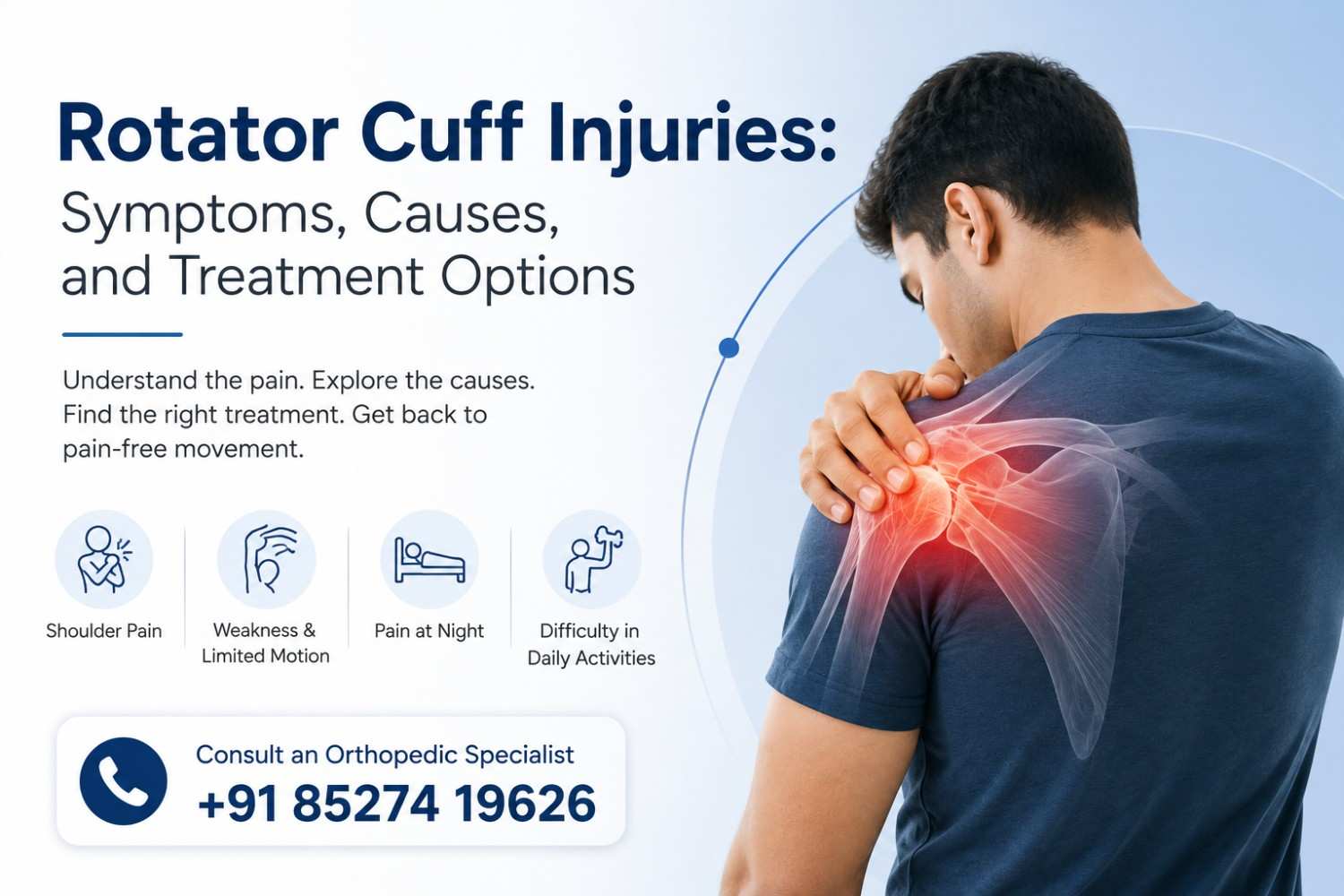
The rotator cuff, a group of four muscles and their tendons surrounding the shoulder joint, is responsible for stabilising the shoulder and enabling much of its wide range of motion. It's also one of the most common sources of shoulder pain seen in orthopedic practice, ranging from mild irritation that responds well to conservative treatment, to full tears that may need surgical repair.
Recognising Rotator Cuff Symptoms
Pain with overhead movement, reaching up to a shelf, putting on a jacket, or brushing hair, is one of the most characteristic symptoms.
Night pain, particularly when lying on the affected shoulder, is a common and often distinguishing feature of rotator cuff problems.
Weakness when lifting or rotating the arm, sometimes significant enough to affect everyday tasks.
A catching or clicking sensation with certain shoulder movements.
Gradual loss of range of motion, sometimes progressing to significant stiffness if left unaddressed.
What Causes Rotator Cuff Problems
Degenerative Wear Over Time
The most common cause, particularly in people over 40, is gradual wear of the tendon from years of use, sometimes combined with reduced blood supply to the area as we age, which affects the tendon's ability to repair itself.
Repetitive Overhead Activity
Occupations and sports involving repetitive overhead motion, painting, certain manual labour, swimming, tennis, and other overhead sports, place cumulative stress on the rotator cuff and increase injury risk over time.
Acute Injury
A fall onto an outstretched arm, or a sudden forceful movement like attempting to catch a heavy falling object, can cause an acute tear, sometimes in a tendon already weakened by underlying degenerative changes.
Shoulder Impingement
Structural factors in some individuals cause the rotator cuff tendon to be repeatedly pinched during shoulder movement, a condition called impingement, which over time can progress to tendon damage if not addressed.
How Rotator Cuff Injuries Are Diagnosed
A thorough physical examination testing strength and specific movement patterns often provides strong initial clues, and imaging, typically an MRI, confirms the diagnosis and clarifies whether the injury is a partial tear, full tear, or tendon irritation without a tear, a distinction that significantly affects treatment planning.
Treatment Options
Conservative Treatment
For many rotator cuff problems, particularly partial tears or tendon irritation without a tear, physiotherapy focused on strengthening the surrounding shoulder muscles, activity modification, and sometimes anti-inflammatory medication or a corticosteroid injection provide meaningful, often lasting relief without surgery.
Surgical Repair
For full tears, particularly in younger, more active patients, or when conservative treatment hasn't provided adequate relief, arthroscopic rotator cuff repair is generally recommended. This minimally invasive approach reattaches the torn tendon to the bone, with recovery typically involving a structured period of protected movement followed by progressive physiotherapy over several months.
Why Timing Matters
Rotator cuff tears, particularly larger ones, don't generally heal on their own and can progress over time if left untreated, sometimes becoming more difficult to repair successfully the longer surgery is delayed, as the tendon can retract and the surrounding muscle can weaken further. This is exactly why persistent shoulder symptoms deserve timely evaluation rather than being managed indefinitely with rest alone. Our shoulder treatment practice sees this pattern regularly, and an accurate early diagnosis meaningfully improves the range of treatment options still available.
Rehabilitation After Rotator Cuff Repair
Recovery from arthroscopic rotator cuff repair follows a carefully staged progression, and rushing this process is one of the more common, preventable causes of a disappointing outcome. The initial weeks typically involve protecting the repair in a sling, with passive range-of-motion exercises guided by a physiotherapist rather than active use of the shoulder. Active strengthening is introduced progressively over the following months, only once the repair has had adequate time to biologically heal, since the repaired tendon is genuinely vulnerable to re-tearing if loaded too soon. Patience during this phase, even once pain has largely resolved and the shoulder feels deceptively capable, meaningfully protects the long-term result of the surgery.
Distinguishing Rotator Cuff Pain From Other Shoulder Conditions
Shoulder pain has several possible causes beyond the rotator cuff, frozen shoulder, arthritis, and instability among them, each requiring a different treatment approach. A careful clinical examination, sometimes supported by imaging, distinguishes between these, since treating a frozen shoulder as if it were a rotator cuff tear, or vice versa, delays appropriate care considerably.
Frequently Asked Questions (FAQs)
1. Can a rotator cuff problem be managed long-term without ever having surgery?
For some patients, particularly with partial tears and manageable symptoms, ongoing conservative management remains a reasonable long-term choice rather than an inevitable path to surgery.
2. Can a rotator cuff injury cause pain in the arm or hand?
Yes, pain can sometimes radiate down the upper arm, though numbness or tingling in the hand more often suggests a nerve-related cause worth separately evaluating.
3. Can poor posture contribute to rotator cuff problems?
Yes, prolonged poor posture, particularly rounded shoulders, can alter shoulder mechanics over time and contribute to impingement, which in turn can predispose the rotator cuff to injury.
4. Can a rotator cuff tear be reinjured after successful surgical repair?
It's possible, particularly with premature return to demanding activity before full healing, which is exactly why the staged rehabilitation timeline described above matters so much for protecting the surgical result.
5. Can rotator cuff tears occur in both shoulders at once?
It's possible, particularly with degenerative causes affecting both sides similarly over time, though symptoms and severity can still differ between the two shoulders.
6. Does age affect the likelihood of a full recovery after repair?
Older age and larger, longer-standing tears are generally associated with a somewhat less complete recovery, though many older patients still achieve substantial improvement with appropriate treatment.
7. Can a rotator cuff tear heal without surgery?
Small partial tears sometimes improve with conservative treatment, but full tears generally do not heal on their own and often require surgical repair for a full functional recovery.
8. How long is recovery after rotator cuff surgery?
Full recovery typically takes four to six months, involving an initial protected period followed by progressive physiotherapy, though timelines vary based on tear size and individual healing.
9. Is rotator cuff surgery always necessary for a diagnosed tear?
Not always, smaller tears or those in less active patients may be managed conservatively, though larger tears or significant functional limitation typically benefit more from surgical repair.
10. Can rotator cuff problems be prevented?
Regular shoulder-strengthening exercises, proper technique in overhead sports and activities, and addressing early symptoms promptly can all reduce risk, though some degenerative risk increases naturally with age.
11. Is night pain specific to rotator cuff problems, or can it mean something else?
Night pain is a common rotator cuff symptom but isn't exclusively diagnostic, which is why a full evaluation, rather than symptoms alone, is needed to confirm the diagnosis.
12. Can physiotherapy alone resolve shoulder impingement?
Often yes, particularly when addressed early, physiotherapy focused on posture and shoulder mechanics can resolve impingement symptoms before they progress to tendon damage.
This article is for educational purposes and does not replace personalized medical advice. Please consult a qualified physician before making changes to your treatment, medication, or health screening plan.
Related Articles
When Is Hip Replacement Really Necessary?
Hip replacement may be considered when persistent pain, stiffness and loss of function continue despite appropriate non-surgical treatment.
Sciatica vs Back Pain: Warning Signs That Need Urgent Spine Evaluation
Back pain with pain travelling into the leg may involve irritation of a nerve root.
Stress Fracture Symptoms in Runners: When Pain Is More Than a Shin Splint
Pain that becomes more focal and worsens with running may be more than a routine training ache.