4 min read
Which Treatment Is Best for Knee Pain? Options, Recovery, and When to See a Doctor
Find out which treatment is best for knee pain, including non-surgical options, surgery, recovery, and when to see a specialist.
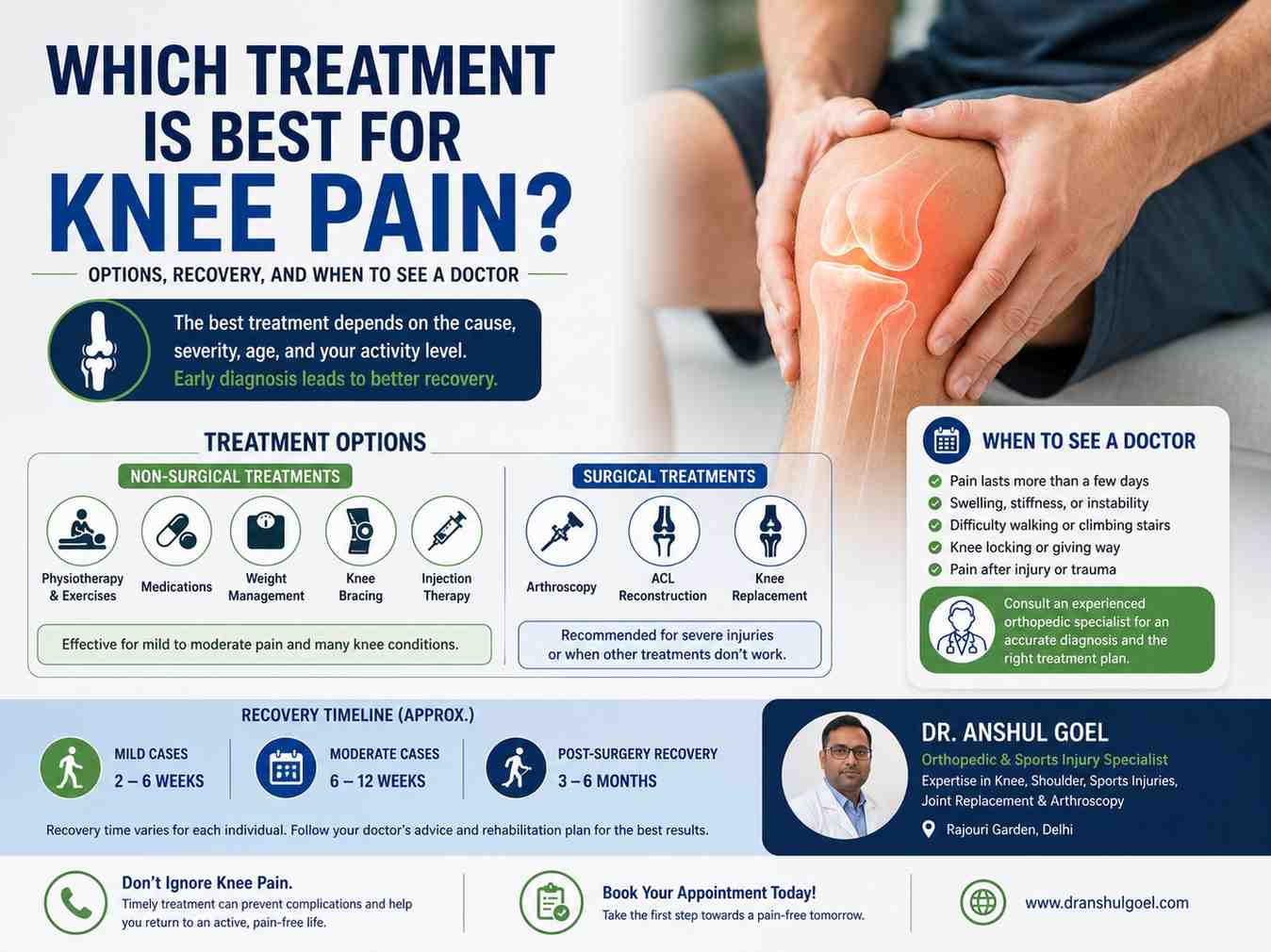
Which Treatment Is Best for Knee Pain? Options, Recovery, and When to See a Doctor
Knee pain is one of the most common problems affecting people of all age groups. It can range from mild discomfort to severe pain that interferes with daily activities like walking, climbing stairs, or even standing. The most important question patients ask is: which treatment is best for knee pain? To explore all available options, you can also review our orthopaedic services page.
The answer is not the same for everyone. The best treatment depends on the cause of pain, severity, age, activity level, and overall health. Some people recover with simple non-surgical treatments, while others may require advanced procedures. In this guide, we break down all treatment options so you can understand what works best for your condition.
Understanding the Cause of Knee Pain
Before choosing the right treatment, it is important to identify the root cause of knee pain. Common causes include:
- Ligament injuries (such as ACL tears)
- Meniscus tears
- Arthritis (osteoarthritis or rheumatoid arthritis)
- Overuse injuries
- Muscle weakness or imbalance
- Fractures or trauma
A proper diagnosis helps determine whether conservative treatment will work or if surgical intervention is needed. In cases of sports-related injuries, evaluation through a structured sports injury treatment plan is often recommended.
Non-Surgical Treatments for Knee Pain
In many cases, knee pain can be effectively managed without surgery. These treatments are usually the first line of care.
1. Physiotherapy
Physiotherapy is often the most effective treatment for knee pain. It focuses on strengthening the muscles around the knee, improving flexibility, and restoring joint function. Regular exercises can significantly reduce pain and prevent future injuries.
2. Medications
Pain relievers and anti-inflammatory medications help manage symptoms, especially during the initial stages. These medications are usually combined with other treatments rather than used alone.
3. Activity Modification
Avoiding high-impact activities like running or jumping can reduce stress on the knee. Low-impact exercises such as swimming and cycling are often recommended.
4. Weight Management
Excess weight increases pressure on the knee joint. Even a small reduction in weight can significantly improve symptoms.
5. Knee Bracing
Knee braces provide stability and support, especially in cases of ligament injury or mild instability.
6. Injection Therapy
Doctors may recommend injections such as corticosteroids or PRP (Platelet-Rich Plasma) therapy to reduce inflammation and promote healing.
When Non-Surgical Treatment Is Not Enough
While non-surgical methods work for many patients, they may not be sufficient in certain cases. You should consider advanced treatment if:
- Pain persists despite medication and physiotherapy
- You experience knee instability
- There is significant joint damage
- Daily activities are severely affected
Surgical Treatment Options
Surgery is recommended when conservative treatments fail or when the damage is severe.
1. Arthroscopy
A minimally invasive procedure used to treat ligament injuries, meniscus tears, and cartilage damage. Recovery is usually faster compared to open surgery. This is commonly performed using arthroscopy surgery techniques.
2. ACL Reconstruction
For patients with ligament tears, especially athletes, ACL reconstruction helps restore stability and function. Proper ACL tear treatment ensures long-term recovery and prevents further damage. In such cases, doctors may recommend ACL reconstruction surgery.
3. Knee Replacement Surgery
In cases of severe arthritis or joint damage, knee replacement surgery may be the best option. It significantly improves mobility and quality of life. Learn more about this option on our knee replacement surgery page.
How to Choose the Best Treatment
Choosing the best treatment for knee pain depends on several factors:
- Age and activity level
- Severity of the condition
- Type of injury or disease
- Response to previous treatments
- Personal goals (sports, daily activities, etc.)
Consulting an experienced specialist helps you make the right decision based on your condition. If you are unsure about your diagnosis, you can directly book a consultation for proper evaluation.
When to See a Doctor
You should not ignore knee pain if you notice:
- Persistent pain lasting more than a few days
- Swelling and stiffness
- Difficulty walking or standing
- Knee instability or locking
- Pain after injury or trauma
A qualified sports injury doctor in Delhi can evaluate your condition and recommend the most effective treatment plan.
Recovery and Long-Term Care
Recovery depends on the treatment method and severity of the condition. While minor injuries may heal within weeks, surgical recovery can take several months. Following the rehabilitation plan is essential for achieving the best results.
- Mild cases: 2–6 weeks
- Moderate cases: 6–12 weeks
- Post-surgery recovery: 3–6 months
Final Thoughts
There is no single answer to which treatment is best for knee pain. The right approach depends on your condition and lifestyle. Early diagnosis and proper treatment can prevent complications and help you return to an active, pain-free life.
If you are experiencing knee pain, do not delay consultation. A timely evaluation and the right ACL tear treatment or orthopedic care can make a significant difference in your recovery.
Related Articles
Knee Replacement Infection: Early Warning Signs and When to Contact Your Surgeon
Learn the early and late warning signs of infection after knee replacement, when to contact the surgical team, and why prompt assessment matters.
घुटने में बार-बार सूजन या पानी क्यों भरता है? कब Orthopedic Doctor को दिखाएं?
घुटने में बार-बार सूजन, पानी भरने और जकड़न के सामान्य कारण समझें। जानें कब घर पर देखभाल ठीक है और किन संकेतों में तुरंत डॉक्टर को दिखाना चाहिए।
Partial vs Total Knee Replacement: Who Is a Good Candidate?
Understand how partial and total knee replacement differ, which findings affect candidacy, and why the final decision requires symptoms, examination and imaging together.